How Haas have utilised the ‘unique’ opportunity of the April break
Haas’ Head of Car Engineering, Hoagy Nidd, has shared an insight into what the team have been doing during the April break.

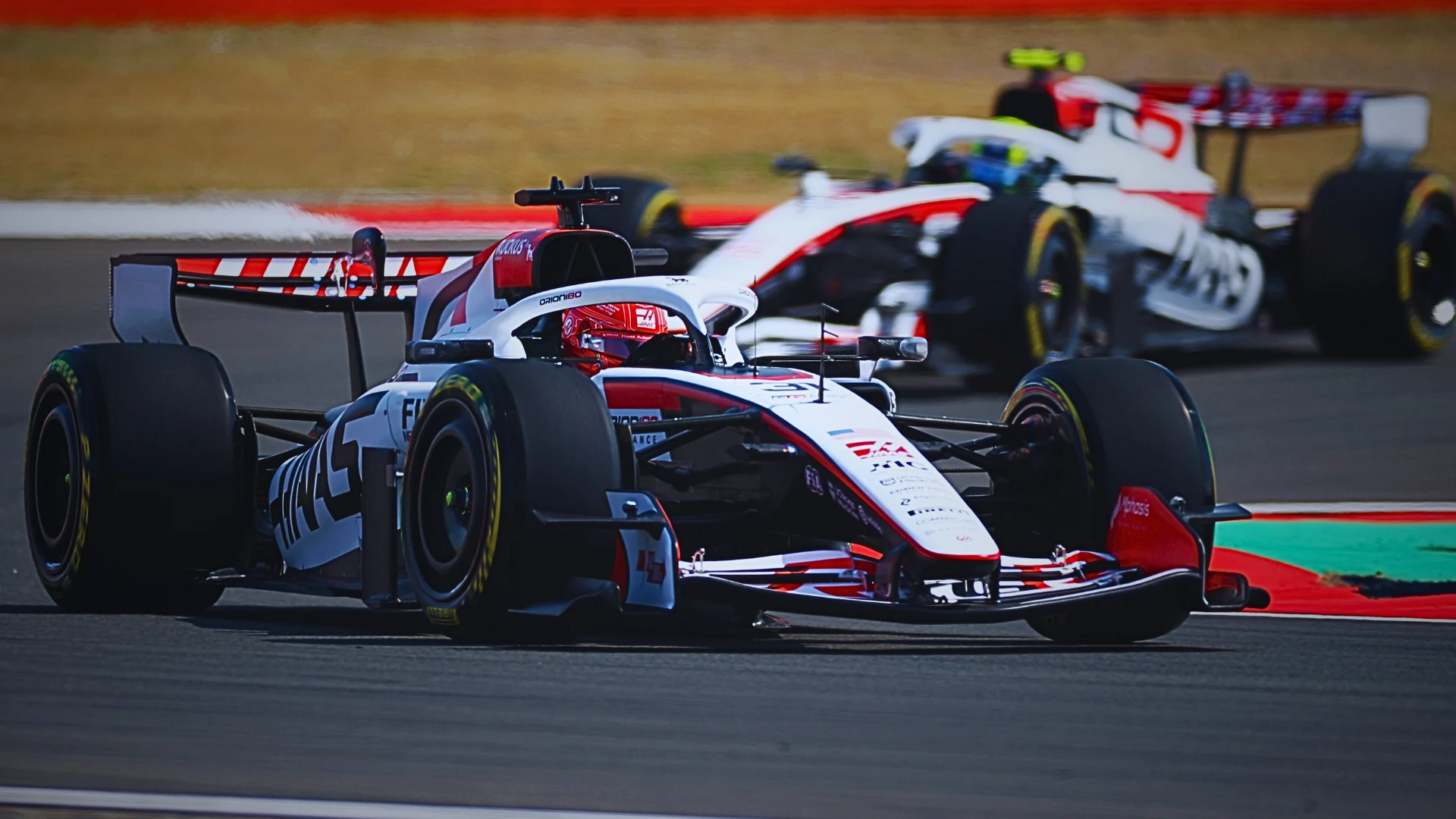
Following the news that the Bahrain and Saudi Arabian Grands Prix would no longer take place, the F1 teams and drivers were given an unexpected five-week break in the calendar during the month of April.
However, this did not mean that the paddock would be resting up; instead the pause has provided a chance for each squad to work on any particular areas of focus ahead of the season’s resumption in May.
Over at Haas, Head of Car Engineering Hoagy Nidd has shared an insight into what this time has looked like for the American outfit, including the tasks that they have prioritised, their plan for updates during the season ahead, and how they are approaching the upcoming Sprint weekend in Miami.
Fourth in the championship after ‘frantic’ start to season
Amid a solid start to the campaign for Haas that has seen them take fourth place in the Teams’ Championship, Nidd admits that there are mixed feelings about pausing right now whilst also acknowledging that the break is a chance to catch up following a very busy pre-season.
“I think we've been quite glad to take the opportunity to conduct this work at home and really get into some stuff, because the winter was so short,” he explains. “We’re the smallest team in Formula 1 in terms of headcount.
“We had an incredibly compressed car build at the start of this year. It was frantic in terms of parts supply and getting ourselves to our first filming dates and that first test in Barcelona. We also pushed our performance pretty hard at the end of last year.
“As I'm sure a lot of people are aware, we were the last team to bring a big update to 2025, and that meant that, being such a small team, we struggled to run projects in parallel, so it meant that this winter was pretty busy. So yeah, we were glad to take that opportunity.
“Maybe on the other hand, there's a competitive part of us that also would like to still be racing during this period because, as I said, whilst we're the smallest team in Formula 1, we're currently fourth in the championship, and that's completely on merit. It's not fortuitous.
“We've been as quick as some much bigger teams who have far bigger headcounts and far bigger budgets and can call on greater resources from their factories, so it would have been nice, in a way, to keep trying to put points into them and keep going, but yeah, we'll take the opportunities that we get.”
Balancing smaller tasks with bigger projects
Nidd concedes that having such a break at this stage of the season is “unique”, going on to explain that the work has “fallen under two main areas” for the team during the gap in the calendar.
“First of all, as I mentioned, we've played a bit of catch-up since the start of the year, and so we've been able to do some on-car tests and a few things that we just weren't able to do back in January and February,” says Nidd.
“That includes some quite simple things like gearbox stiffness testing, through to some slightly more advanced analysis of the car and really getting into some of the details of it. We've also assembled and built up our spare chassis here. That's a big task for a team as small as ourselves.
“We obviously had a spare chassis available at the first few races this year, but we hadn't built it up at that point. The first couple that we built, we found a number of teething problems on it, as every team does, and you spend your time getting through those.
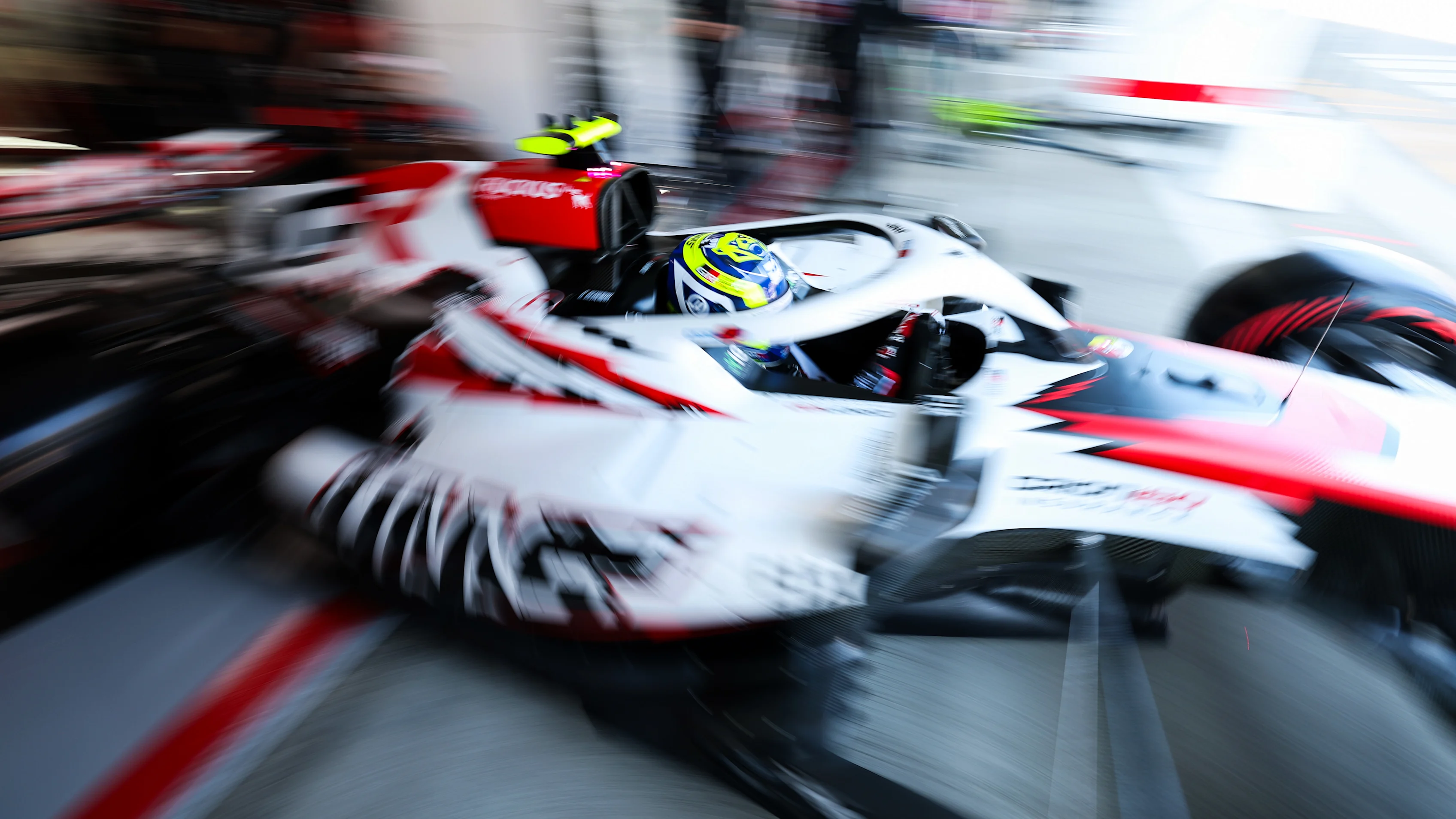
“The nature of requiring a spare chassis is you often need it in a bit of a hurry when you're at the track, and it can be quite a fraught situation. The last thing you want to be doing is discovering problems when you're at the circuit, so we built up our spare here, and we will introduce that in Miami.
“We've also done a few more mundane things. Different parts of the business have gotten into stock reviews, for instance, where we've gone through all of the stuff that we've taken to the first races. We've obviously suffered some fairly public attrition of parts in Suzuka.
“We've had to go through the bits and see what we've got around us, see what we've needed to get remanufactured and ordered. Then, of course, with some of the big world events that are going on at the moment, that's translated into some quite expensive freight for us.
“That comes out as a more expensive cost per kilo for future races this year, so we've taken a chance to reduce some of the bits that we're going to take to Miami in some of the future races. That's good for us, both in terms of cost and on our environmental targets for the business.”
‘A lot going on’ including front wing and reliability work
Additionally, Nidd says that Haas have also been able to respond to “things that have become apparent” during the opening three rounds of the campaign, with the 2026 cars’ early stage of development meaning that there is still “a lot of performance to be had” going forward.
“We've seen one good example of that in Suzuka,” Nidd explains. “We introduced an update to the front wing. It was a fairly small update, our first one of the year, but we've realised that the front wing is a massively sensitive part of car performance these days.
“With the movable aero that we've got now, it's quite a challenge to make sure that the front wing delivers in a consistent way, both between different assemblies and across different sessions, even with the same wing.
“We've done a bit of a project here looking at that and looking at the kinematics of it and how it works, and how we can make sure that we always deliver the same performance for the driver, because ultimately that's our balance tool on the car. It dictates the feel of corner entry – it's such a powerful thing.
“The other big one that we've gone through is there's obviously been a lot of reliability things that we've been firefighting through the first part of the year. We've, I would say, gotten on top of it fairly well, but there's still been bugs and things that we've had to work through, so we've done a lot of electrical testing, for instance, of different components.
“We've had to look at some of the sensors that form part of the driver feedback loop, so that's information that's available to the driver that maybe hasn't been as good as we would like it to have been. We're going through that, trying to refine that and improve it. There's been a lot going on, and it's not done yet. We're still doing it.”
Deciding what to prioritise and the approach to updates
In terms of how the team decided what to prioritise for car development during the April break, Nidd says: “We had a good meeting whilst Suzuka was ongoing, quite late at night for me. But we had a big meeting about what we could do in this break. We went through it, did all the priorities.
“Everything was priority one, and so you quite quickly say, ‘That can't be the case’. We've had to look at it both in terms of a pragmatic approach – what can we do, what can we do in the time, what can we do quickly with what we have available, and what can we do for the cost as well.
“We've also looked at it in terms of what we have coming up in future races – we have upgrades planned. There's no point in trying to refine those bits when we're already working on an upgrade to those. We probably won't get the most out of it.
“So we targeted something such as the front wing, which we know is going to be stable for a little while now and we know that everything we can put into that will pay us back pretty well, so that's one example of it.
“Then there are other bits where we can sort of put things in parallel around the business, where you don't need to do all your projects in series on an individual component or area or part or system. We were able to load a lot of stuff – the stock tape, the store stuff, for instance. That can just happen in the background at the same time.”
Looking at the upgrade plan – and the complications that may have been posed by reshuffling that when it was confirmed that no races would be taking place in April – Nidd admits that this is something that the team are “going through at the moment, looking at our next upgrade and how we introduce it”.
“It's balancing budget against front loading what we have this year,” he explains. “Whilst we're in a position where the performance of the car is quite immature, shall we say, and there's a lot of low-hanging fruit, our decision has been to front load as much as we can.
“We're pushing as hard as we can to bring as much to the car early on. That's always a balance because, of course, the longer you leave it, then the more performance you get for that upgrade, generally.
“It means that you end up pushing very, very hard with your drawing office release targets and then your manufacturing dates of when parts become available in stores, and then just the simple fact of logistics and getting it out to the track and having enough parts to actually run in a safe way, so that you have enough to replace bits should you need to at the circuit.
“It's sort of similar pressures to last year, but perhaps it forces you into front loading more performance onto the car and pushing to get things into the earlier races.”
Assessing updates across two Sprint weekends
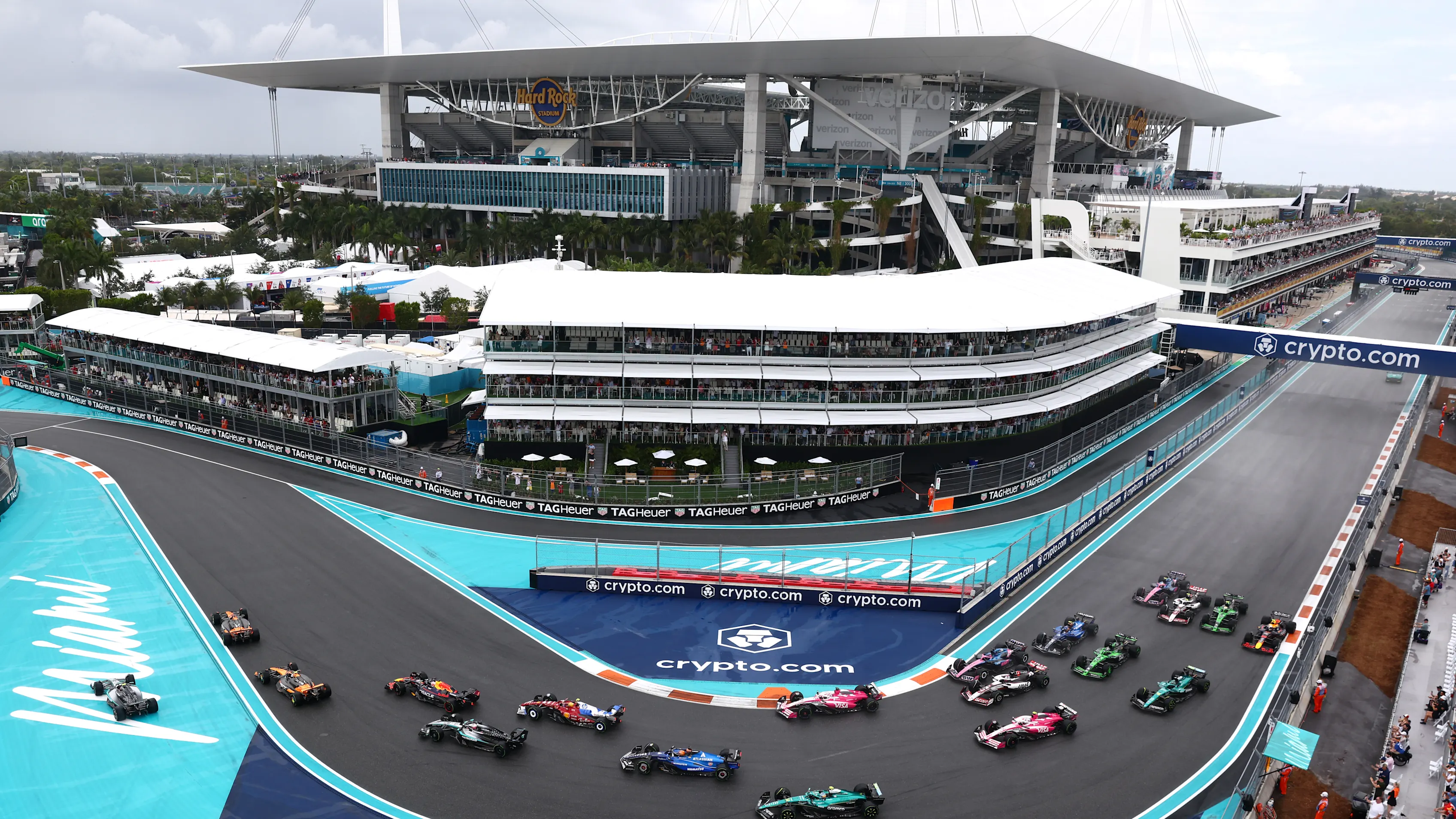
There will be plenty of action in store when the season resumes in May, with the first two events after the break – the Miami and Canadian Grands Prix on the weekends of May 1-3 and 22-24 respectively – both set to host a Sprint, before the European leg begins in June with Monaco.
As such, Nidd acknowledges that bringing an upgrade at this point can pose challenges.
“It's not much fun trying to introduce an update during a Sprint event,” he explains. “I think most teams have been there at some point, but it puts a lot of pressure on it and it also introduces quite a lot of risk on two sides.
“First of all, when you introduce an update, the nature of it is you don't have a full set of all of the parts – generally, you're carrying fewer spares. At a Sprint event, that means you've doubled your chances of things not being available when you need them under parc ferme conditions or something like that.
“Then, of course, there's just less time. There's less time to evaluate a car in FP1. If it's a big update, you might not have a chance to upgrade the car for your Sprint Quali session. You may choose to do it after the Sprint race on one car, but even that represents a risk in itself because effectively two races on the weekend doubles your chance of damaging some parts.
“That's a big factor with the upcoming races, but you have to balance that against the fact that the upgrade packages at this point in the year tend to be larger gains than we're used to seeing. The more you can front-load it, the more chance you have of realising that gain, and it's critical. You're just balancing the risk against taking that performance as soon as you can.
“Obviously, for a race such as Monaco, if you're introducing an upgrade package, it tends to be a lesser effect because the aero effect is smaller and it's a tighter circuit. Monaco is all about just putting the car on track and running.”
Addressing ‘struggles’ for Ocon
With work still ongoing on Haas’ in-house simulator at their Banbury headquarters, the team are using a facility operated by partner Toyota in Epsom in the meantime.
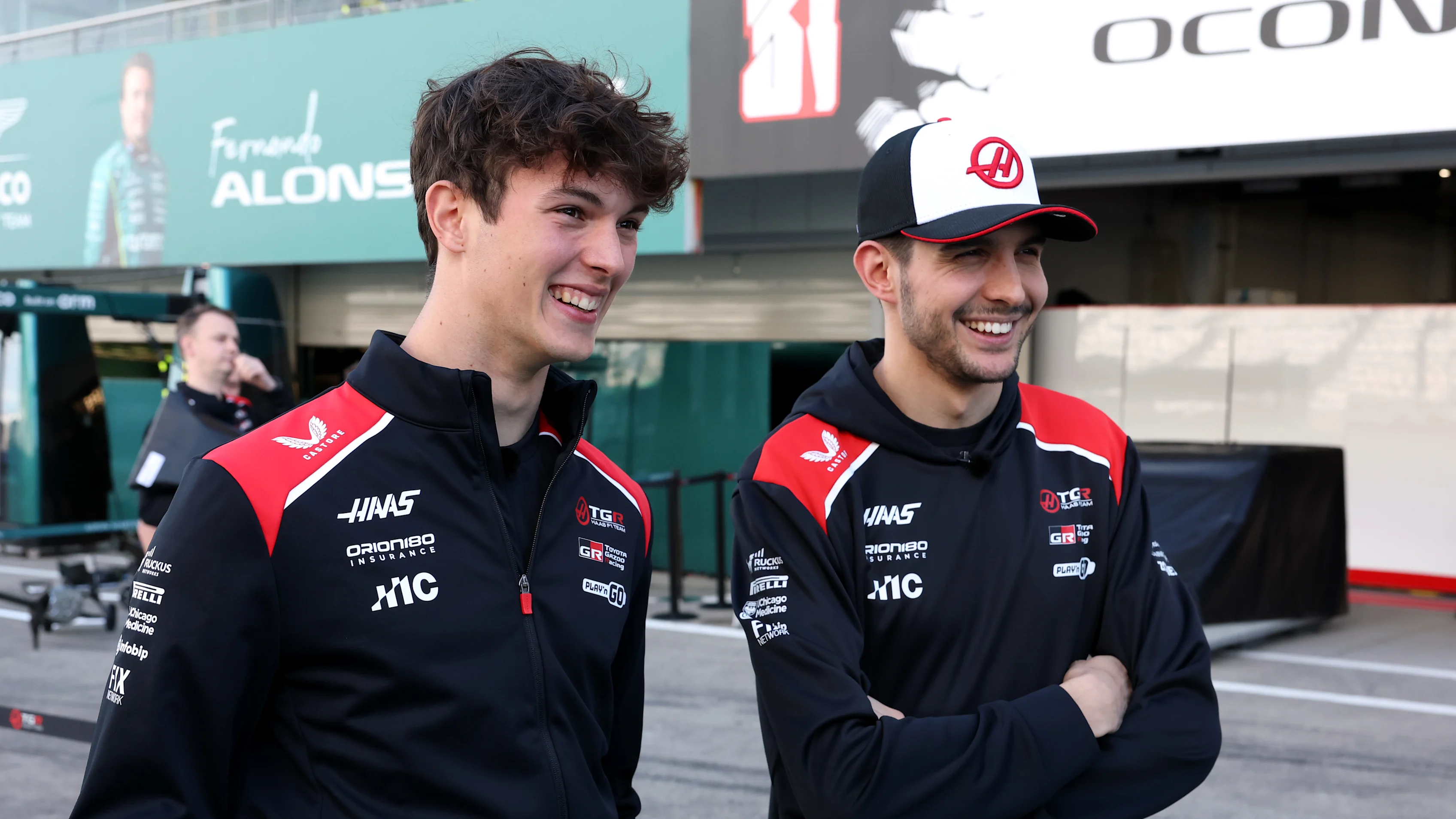
However, when asked if the April break has offered the chance for drivers Ollie Bearman and Esteban Ocon to spend more time on the simulator in order to prepare a few races in advance, Nidd answers: “Not so much.
“We've been able to stick to the plan really – we're always a little bit reluctant to do stuff too far in advance of races because there's obviously things that come to light. There's the normal pattern of work that goes on with race engineering around races, and we haven't pulled that miles further forwards.
“So, yeah, in terms of the sim, we haven't pulled a great deal forwards on that. We've been able to stick to the plan. It's just removed the requirements for some races out of it, obviously.”
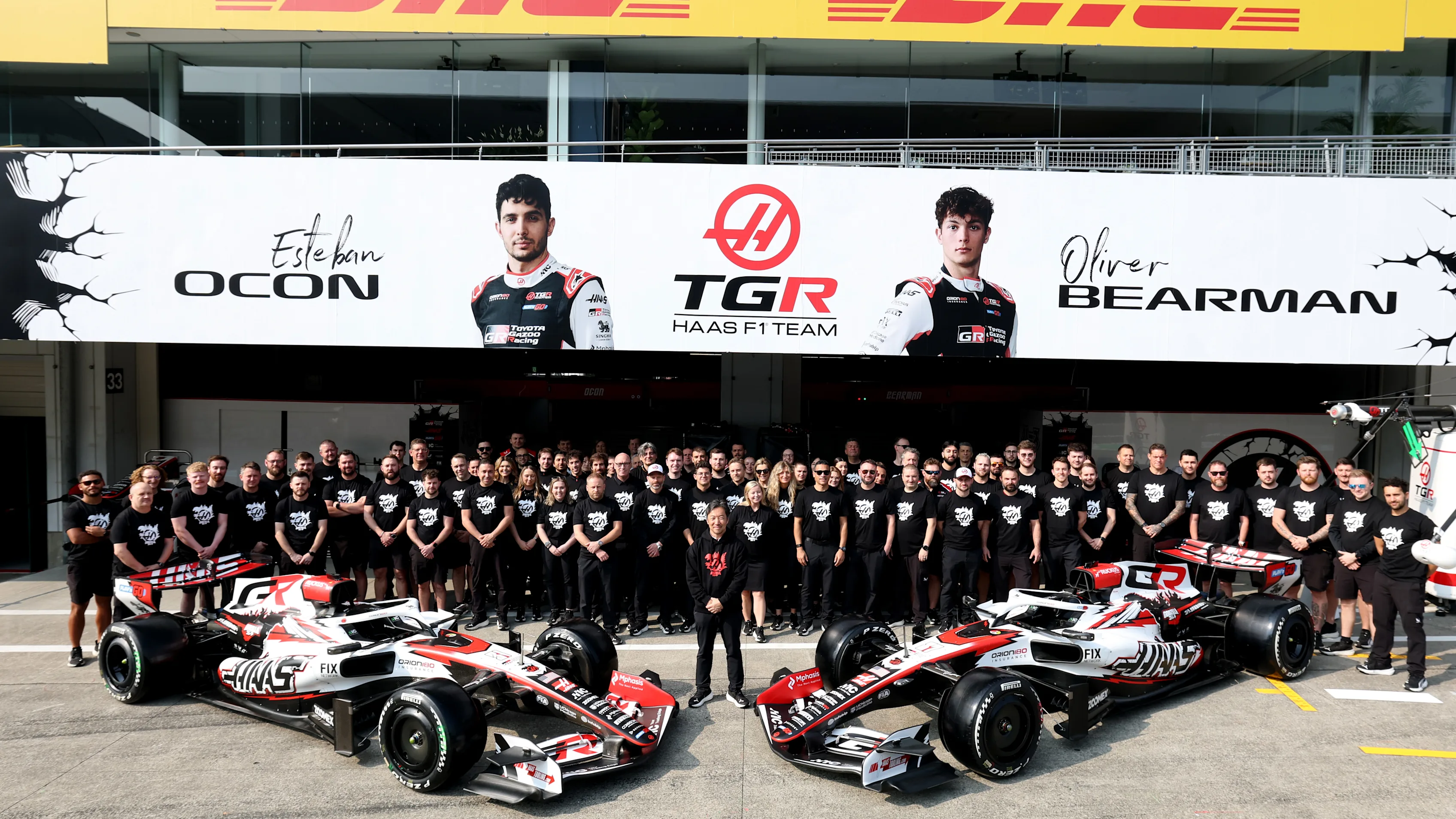
Of the 18 points scored by the squad so far across the first three rounds of the season, 17 have been claimed by Bearman while Ocon’s maiden point arrived at the most recent race in Japan.
Pushed on whether there are certain areas where Ocon might be finding things tougher than his team mate, Nidd explains: “Esteban is a fantastic driver. When the car is sorted for him, he's absolutely brilliant. He's had a couple of struggles in the first couple of races, as he's mentioned.
“He's struggled with the car balance, he's struggled with some of the consistency of the feeling in the car. As I've already touched on, part of our work in this break is making sure that we can deliver that consistent car for him. That's our job, so some of it has been that.
“Some of it has actually been luck as well. China was a good example – in Qualifying, he didn't quite get his first lap up together, and then his second push lap in that Q1 session, we got a yellow flag and he was out.
“There was a little bit of luck there, and once that yellow flag was out, you're into a bit of a field where you end up scrapping with some other cars. He ended up hitting one of the Alpines and just got himself into a bit of a tricky weekend from that point onwards.
“So it's twofold always. It's about us delivering the car so that he can get the most out of it, and then when you do start to get the most out of it, luck tends to go your way, because there's not really any such thing as luck.”
.webp)
Next Up
Related Articles
/GettyImages-2294860261.webp) ‘Hurts a lot’ – Bearman after crash rules him out of Qualifying
‘Hurts a lot’ – Bearman after crash rules him out of Qualifying UnlockedWhat are the tyre strategy options for the Spanish Grand Prix?
 BettingSpanish GP Bet Builder picks after Norris takes pole
 Hamilton reflects on missing pole for Spanish GP
 Beganovic dominates F2 Feature Race at the Madring
/16x9%20single%20image%20-%202026-09-13T163318.829.webp) Hamilton explains brake issues that caused Spanish GP DNF
Hamilton explains brake issues that caused Spanish GP DNF