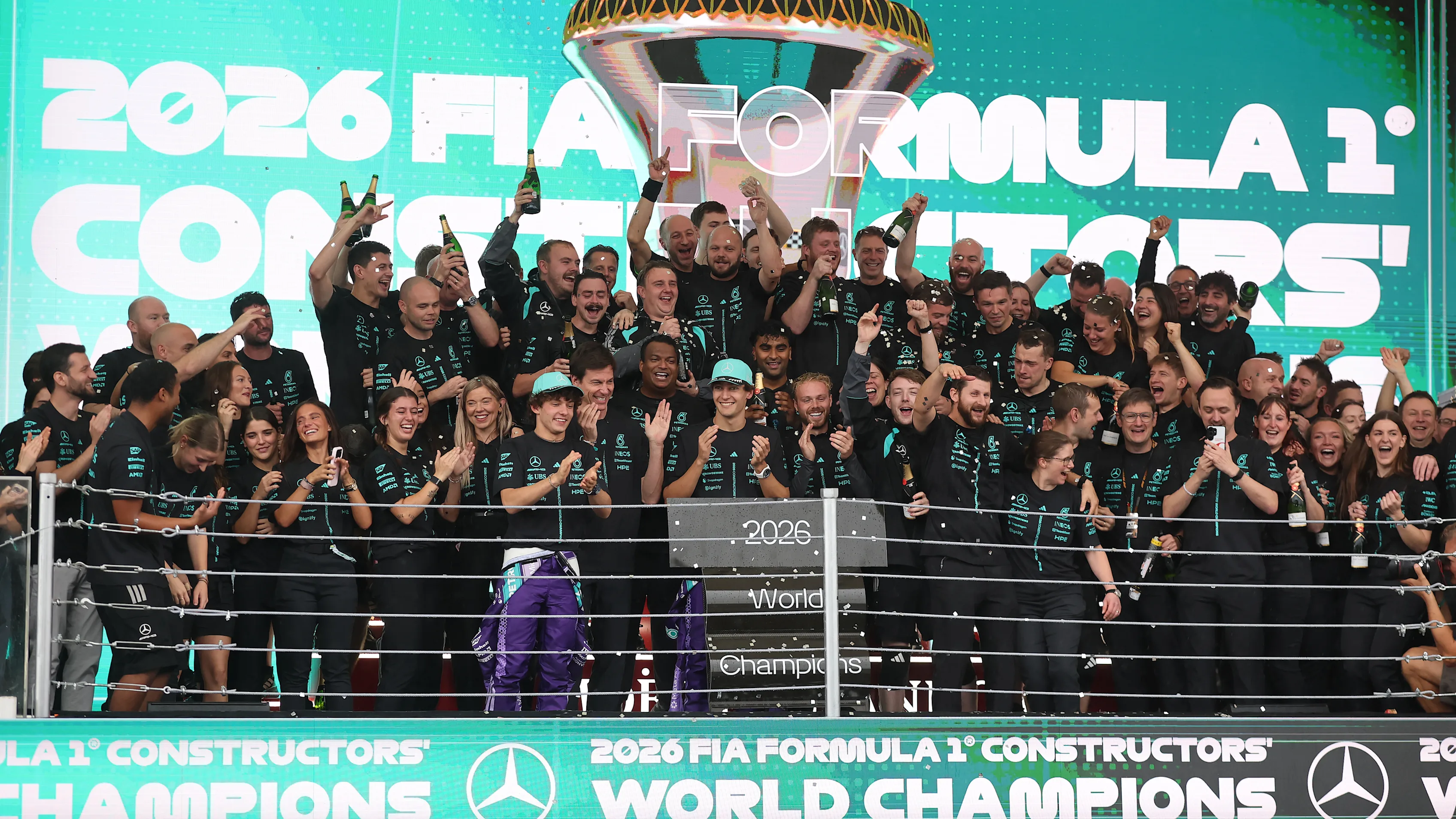
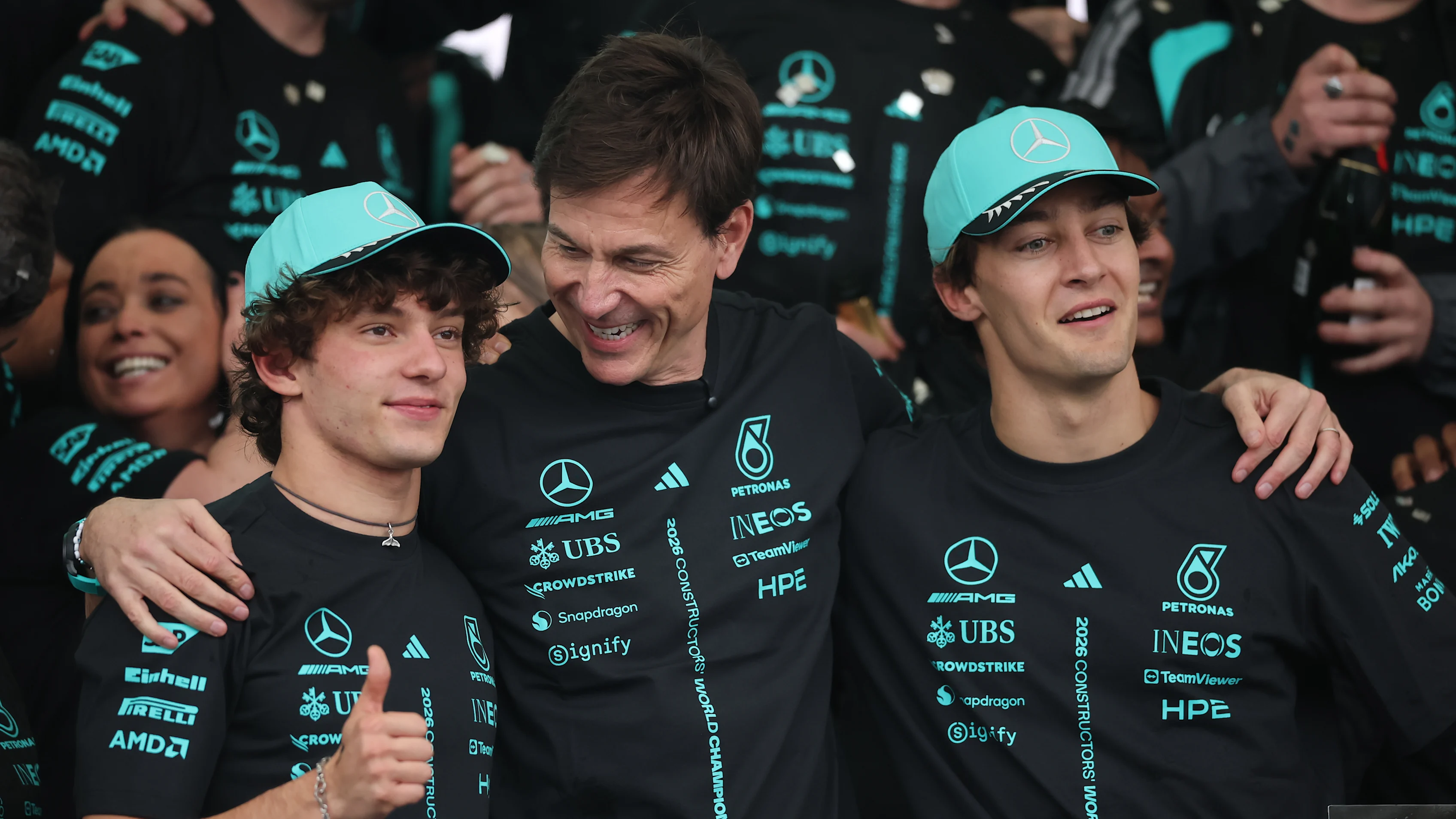
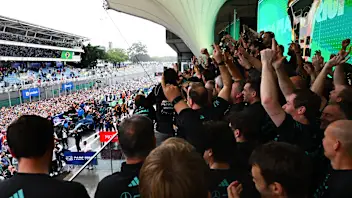
The Sao Paulo Grand Prix last weekend proved to be a day of celebration for Mercedes, as the German manufacturer secured the 2026 Constructors' Championship.
The Silver Arrows only needed a handful more points than Ferrari to secure the crown in Brazil, which moved Mercedes up to joint third in the all-time Constructors' Championship winners table.
But who remains ahead of them and which other teams have achieved the special accolade?
One-hit wonders
A total of 15 teams have won the Constructors' Championship since it was first introduced in 1958, with six of those managing to secure the title on only one occasion.
The very first was British manufacturer Vanwall during the inaugural season of the new championship standings, with three wins apiece for Stirling Moss and Tony Brooks as the team got the better of Ferrari before the end of the year.
Another British constructor also took the title in 1962, as Graham Hill took the first of his two drivers' titles with the BRM outfit, the combination securing four wins to edge out Jim Clark and Lotus to both titles.
Matra added their name to the list of winners in 1969, the French manufacturer supplying cars to Ken Tyrrell (before creating his own cars for 1970), with Jackie Stewart claiming the first of three drivers' titles.

Stewart's second title came in 1971, and with the help of Francois Cevert, Tyrrell was also able to claim the constructors' title under his own banner.
Nine wins for Michael Schumacher and a further two for team mate Johnny Herbert meant Benetton were able to beat Williams to the teams' crown in 1995, Schumacher also going back-to-back for the drivers' title before moving to Ferrari.
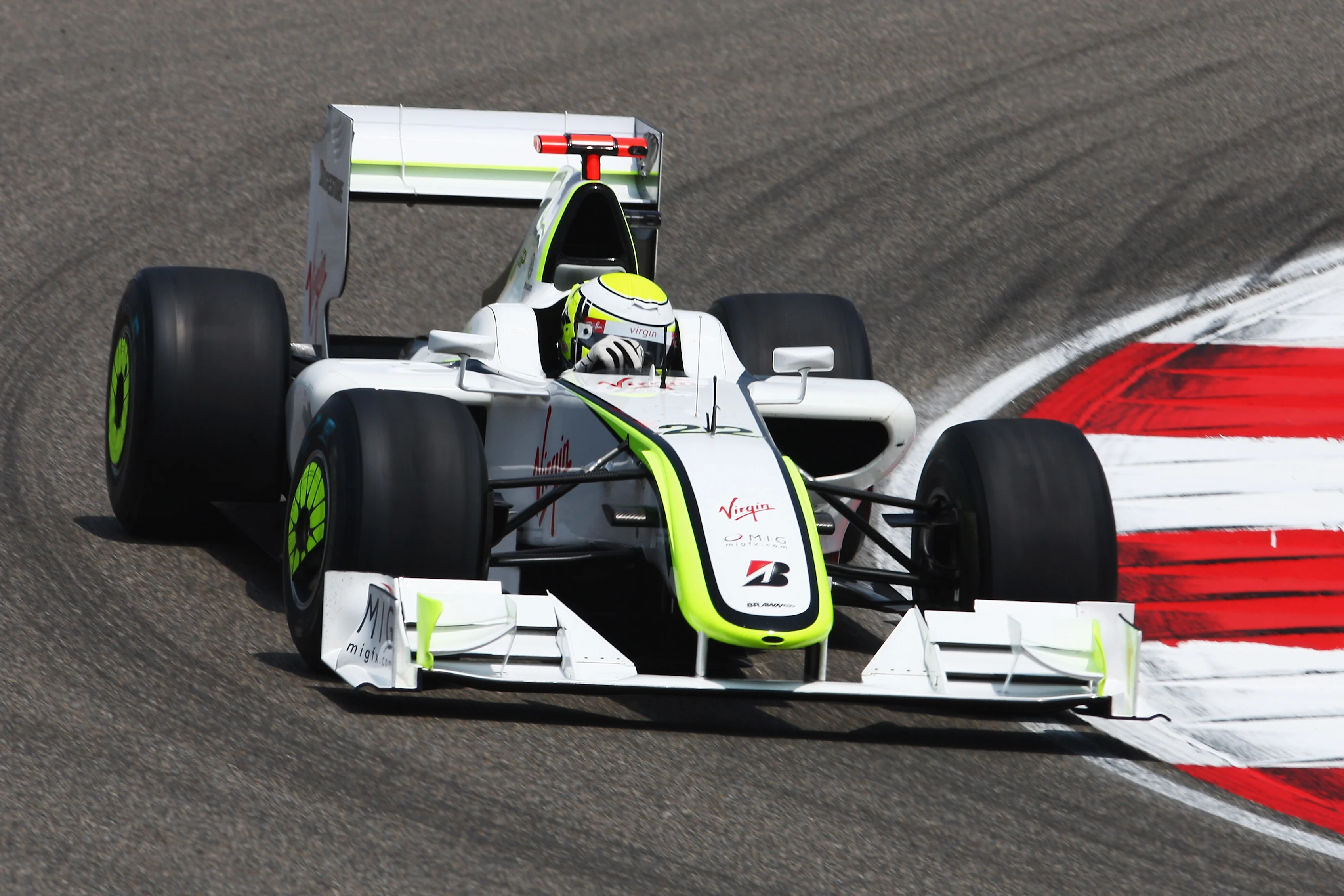
A member of the German's most trusted inner circle at Benetton and then the Scuderia would also add his name to the list of winning constructors, with Ross Brawn taking over Honda's entry for the 2009 season.
Jenson Button's six wins handed him the drivers' title, while two further victories for team mate Rubens Barrichello meant Brawn GP took the title, before morphing into Mercedes for 2010.
Back-to-back champions
Three teams in the history of F1 have only two Constructors' Championships to their name, and all three achieved the feat in back-to-back seasons.
Cooper became the first team, following in the wake of fellow British manufacturer Vanwall by winning the 1959 title with wins for that year's drivers' champion Jack Brabham, as well as Moss and Bruce McLaren.
Brabham secured the second of three drivers' titles the following year with five wins, while another victory for McLaren at the season-opener in Argentina helped Cooper retain their championship.
Having decided to design and build his own cars, in 1966 Brabham became the first, and so far only driver, to win the title racing a car bearing his own name, with the team securing both titles that season.
They achieved the same feat in 1967, but this time Brabham lost out on the drivers' title as team mate Denny Hulme took the accolade.
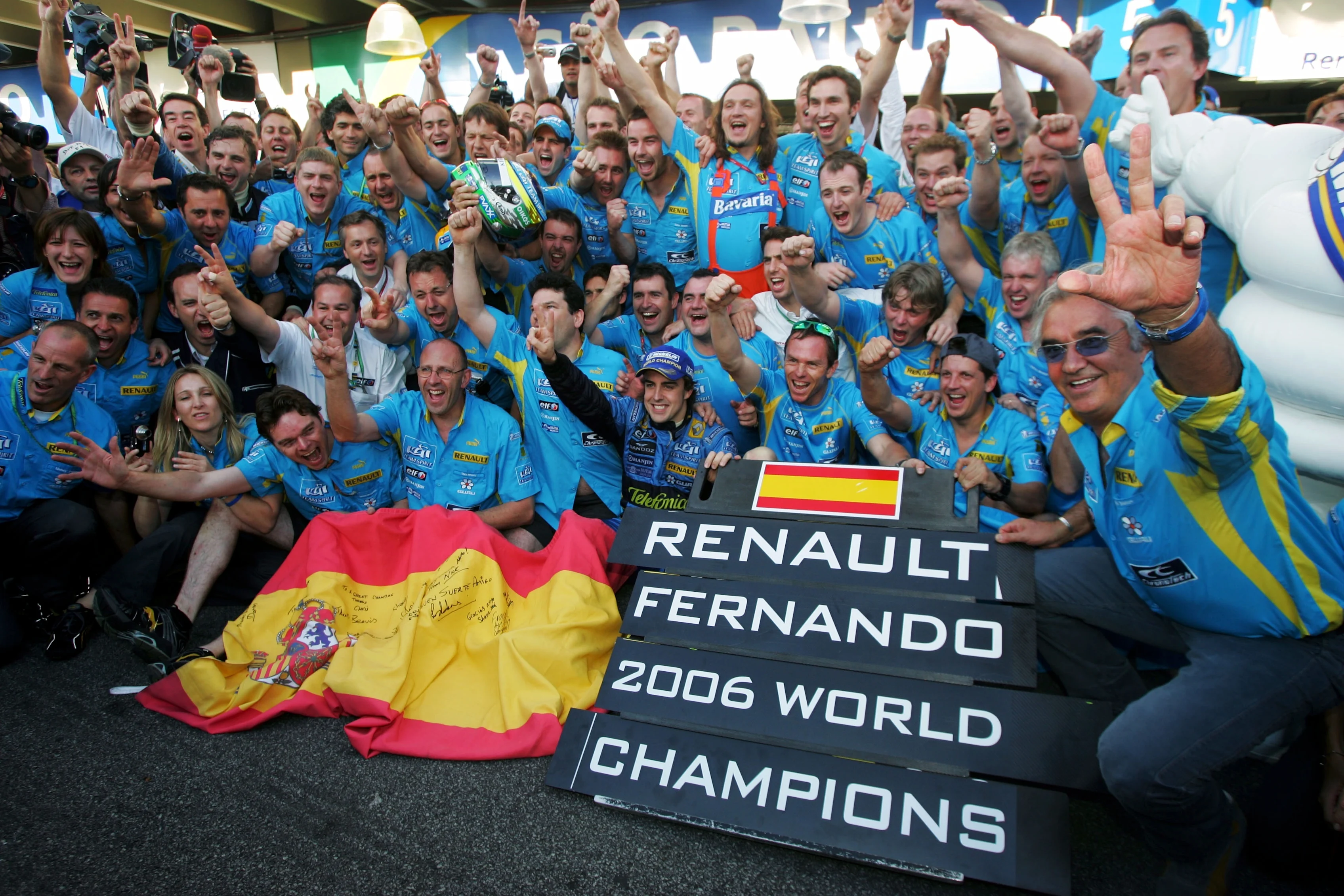
Despite coming close to title success in the early 1980s, it took until 2005 for Renault to reach the pinnacle of the sport, as Fernando Alonso ensured it was a double success.
The Spaniard and Renault squad, based out of Enstone and becoming what is now the Alpine team, won both titles again the following season in 2006, denying a resurgent Ferrari and Schumacher.
Red Bull (6 titles)
Having taken over the Jaguar outfit for the start of the 2005 season, Red Bull were generally seen by many as nothing more than an energy drinks company trying its hand at racing for a few years.
But under the leadership of Christian Horner and having acquired the services of design guru Adrian Newey from McLaren, the team began to make waves and claimed their first wins in 2009 as Sebastian Vettel and Mark Webber achieved six between them over the course of the campaign.
The duo then did enough to claim the team's first title the following season, with Vettel also winning the drivers' title in dramatic circumstances at an Abu Dhabi showdown.
That began a run of dominance as four double titles went the way of Red Bull and Vettel until the 2013 season, the team securing 41 wins with the German and Webber over that period.
New power unit changes for 2014 put Red Bull on the back foot, and despite occasional wins for Daniel Ricciardo and Max Verstappen, it wasn't until 2021 that the latter was able to have a title tilt for the first time.
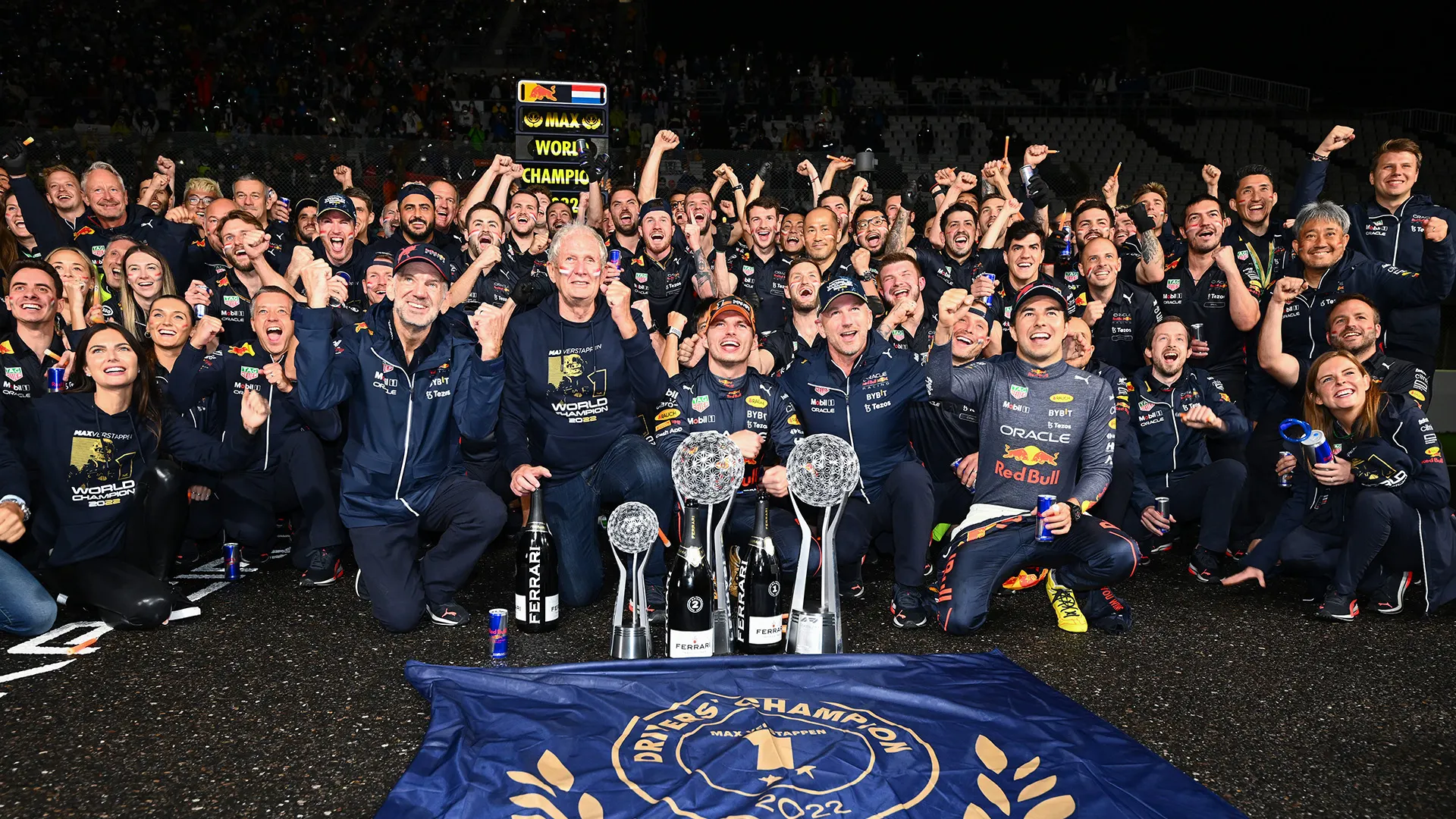
Like Vettel, Verstappen went on a run of four consecutive titles, and with the help of team mate Sergio Perez, Red Bull also came away with two more titles in 2022 and 2023.
Lotus (7 titles)
Such was the dominance of Lotus under the leadership of team owner and designer Colin Chapman during the 1960s and 1970s, that the British manufacturer still remains fifth on this list.
Chapman's first title came in 1963 as he and Clark became one of the sport's greatest pairings, the Scot also taking that year's title as the combination did the double again in 1965.
Even Clark's death early in 1968 during an F2 race at Hockenheim couldn't prevent Chapman from another title double, this time with Hill taking his second drivers' title.
There was further tragedy just two years later, with Jochen Rindt securing the 1970 crown posthumously after his death in practice at Monza after five wins that season, with F1 rookie Emerson Fittipaldi winning in the US on just his fourth start to help secure the teams' title.
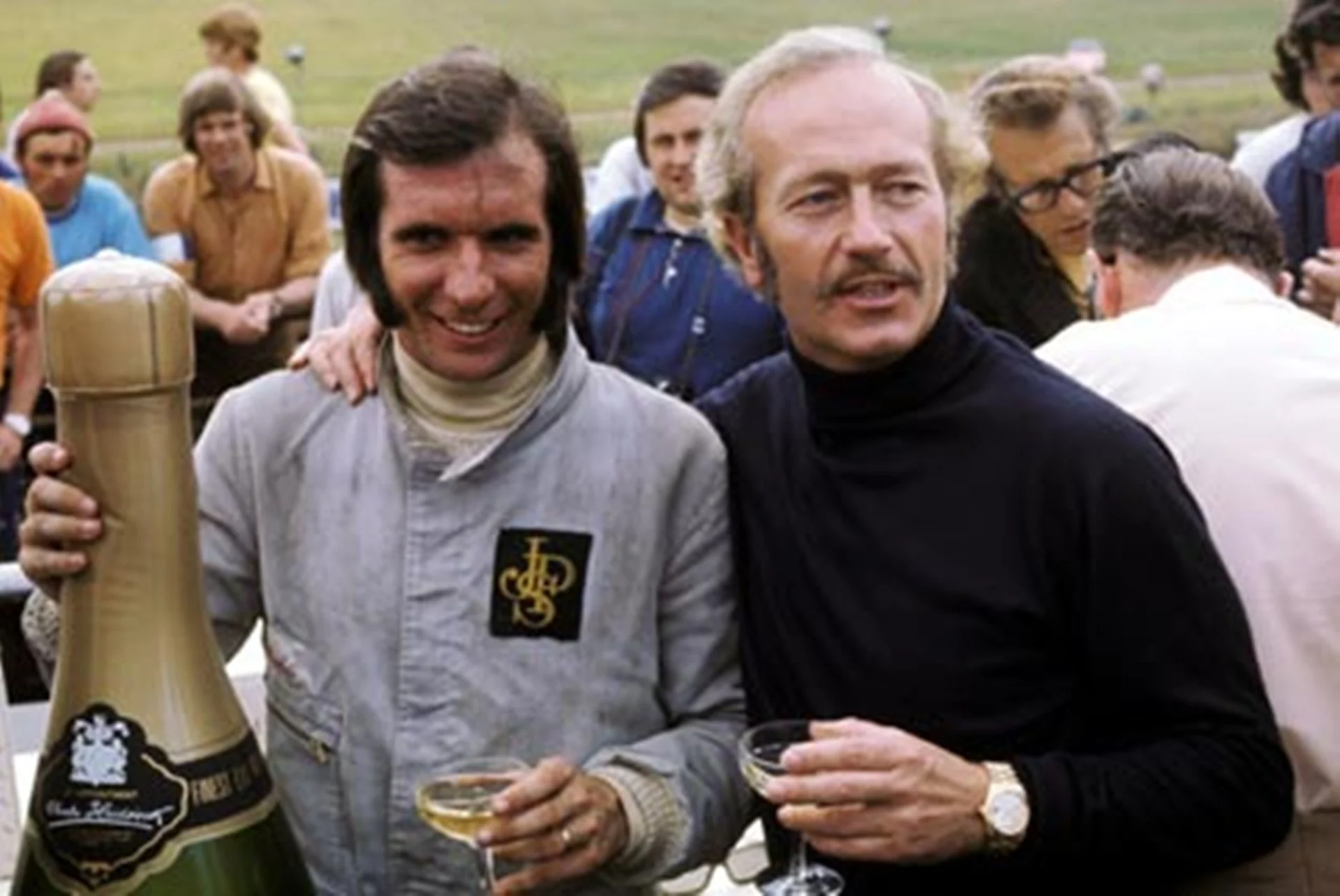
Fittipaldi would lead the team to the double again in 1972 at the wheel of the Lotus 72, with the Brazilian and team mate Ronnie Peterson claiming another crown for Lotus the following year, although both missed out on the drivers' title to Stewart.
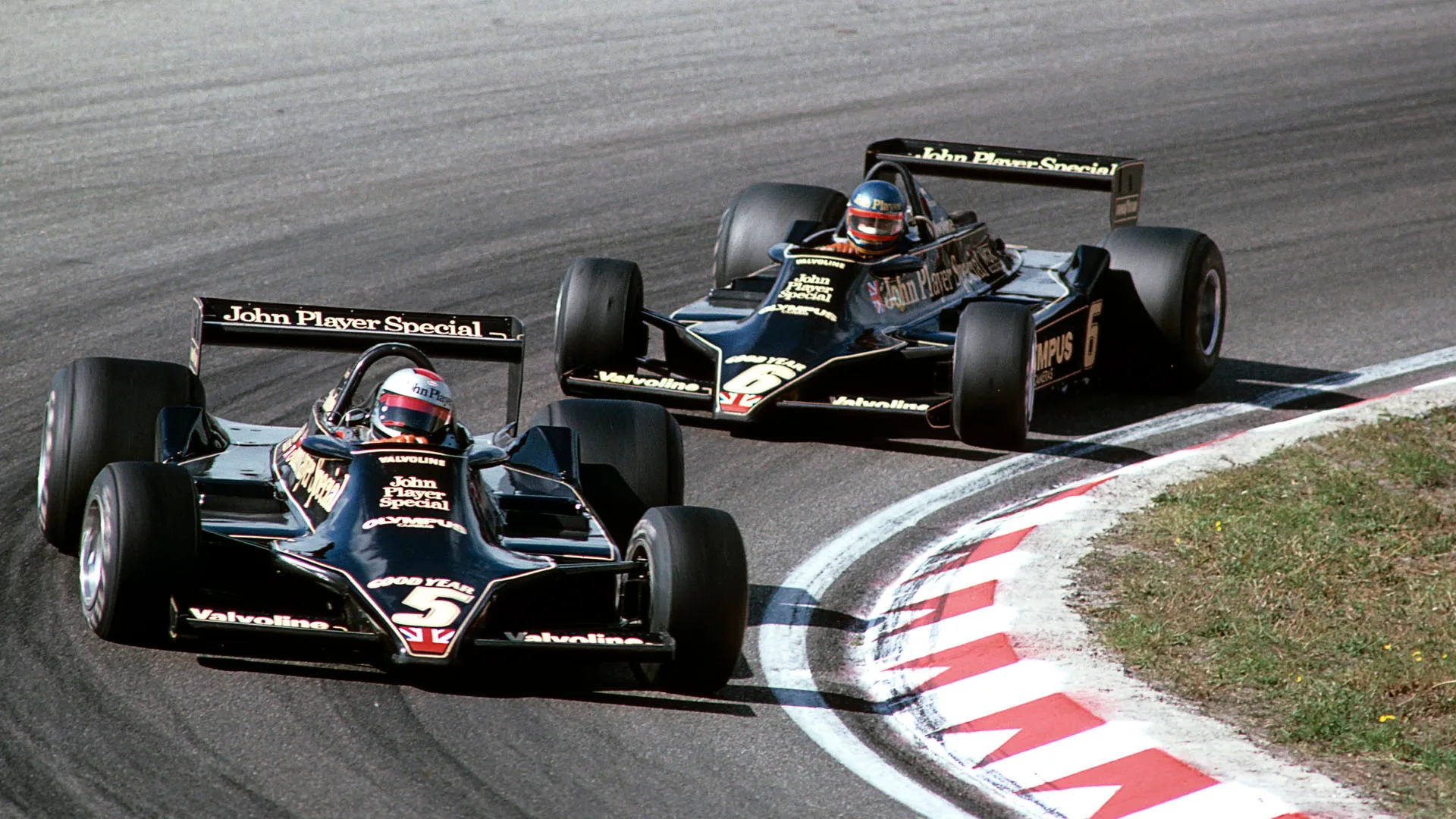
Lotus and Chapman's final championship success came in 1978, the legendary designer creating the Lotus 79 with its ground effect aerodynamics, allowing Mario Andretti to also claim the drivers' title, although the success was overshadowed by the death of Peterson at Monza.
Although the team remained in F1 well into the 1990s even after Chapman's death in 1982, and achieved further victories with the likes of Elio de Angelis and Ayrton Senna, they never again claimed another title success.
Williams (9 titles)
Although Williams' last title came in 1997, they still remain joint third on the list.
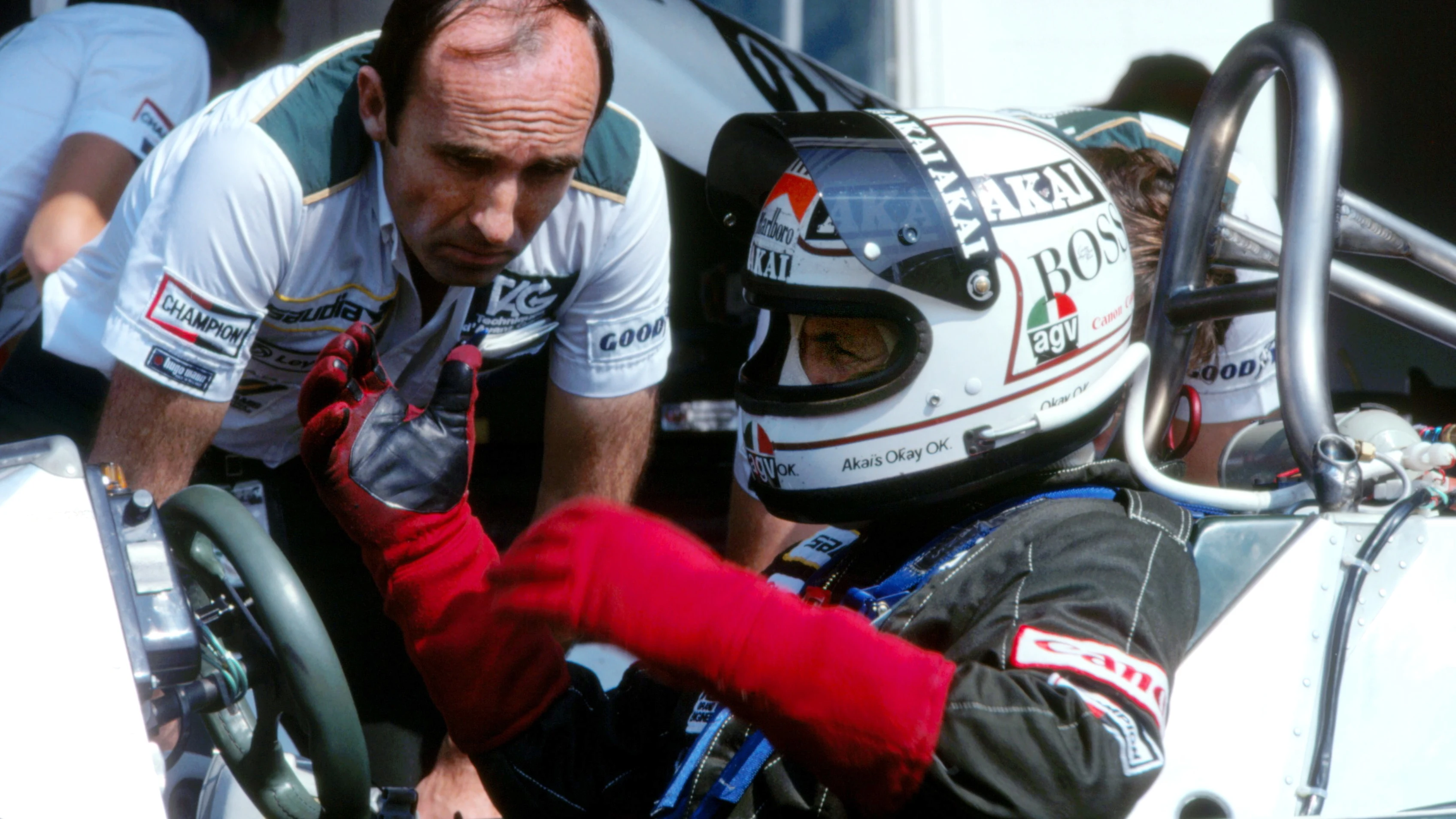
The collaboration of team owner Frank Williams, designer Patrick Head and the no-nonsense approach of Alan Jones proved incredibly effective, and after wins in 1979, the first title followed in 1980 for both car and driver.
Although Jones and team mate Carlos Reutemann, missed out on the drivers' title the following season, the teams' title still went to Williams after the pair achieved two wins apiece.
Despite a drivers' title for Keke Rosberg in 1982, it took until 1986 for Williams to become the dominant force in F1 again with Honda engines, as they secured back-to-back teams' titles, along with the drivers' crown for Nelson Piquet in 1987.
Losing Honda power dropped the team down the pecking order, before a new collaboration with Renault brought their most prosperous period to date at the start of the 1990s.
Nigel Mansell finally secured his long-awaited title in 1992 as Williams dominated, with the team achieving both titles again in 1993 with Alain Prost leading the team.
Senna's death at the start of the 1994 season meant Damon Hill became Schumacher's main challenger, and although the Briton missed out on the individual crown, he along with Mansell and David Coulthard helped Williams secure another title.
Hill and Williams were finally on top in 1996, before Jacques Villeneuve secured the double again in 1997, which remains the team's final championship success to date.

Mercedes (9 titles)
Mercedes dominated F1 in 1955 with Juan Manuel Fangio and Stirling Moss, the former claiming that year's drivers' title, before the Silver Arrows left the sport for more than five decades.
Having taken over Brawn's outfit for the start of the 2010 season, it took until 2014 and an overhaul in power unit regulations before the team were back to winning ways.
But once they started winning, it was hard for the German manufacturer to stop as they claimed eight teams' titles between 2014 and 2021.
Those first three seasons saw Lewis Hamilton and Nico Rosberg battle for the title, with the German finally claiming the sport's biggest prize in 2016 before retiring.
That opened the door for Valtteri Bottas to join the team, and although not as serious a title threat to Hamilton, the Finn ensured that Mercedes claimed another five teams' titles on the bounce, including in 2021 when Hamilton lost out on the drivers' title to Verstappen.
By that point Verstappen and Red Bull had become the dominant force in F1, and it took until another ruleset change at the beginning of 2026 for Mercedes to move back to the very front of the grid.
Kimi Antonelli became the youngest World Champion in F1 history at the Mexico City Grand Prix, while just a week later in Sao Paulo, Mercedes were once again back on top.
McLaren (10 wins)
Bruce McLaren's eponymous team continued even after his death during a testing accident at Goodwood in 1970, going on to become one of the most successful in F1.
The first of 10 teams' titles came in 1974, as Fittipaldi also claimed his second drivers' title, but it took another 10 years before McLaren had a driver combination to claim the constructors' accolade.
They found it in the shape of Niki Lauda and Prost, the pair separated by only half a point at the end of the 1984 season, before the latter went on a run of three consecutive titles – with McLaren claiming the teams' title in 1985.
With Senna joining McLaren for 1988, the combination became almost unbeatable as the team secured 15 out of 16 race wins that year, Senna just beating Prost to the title.
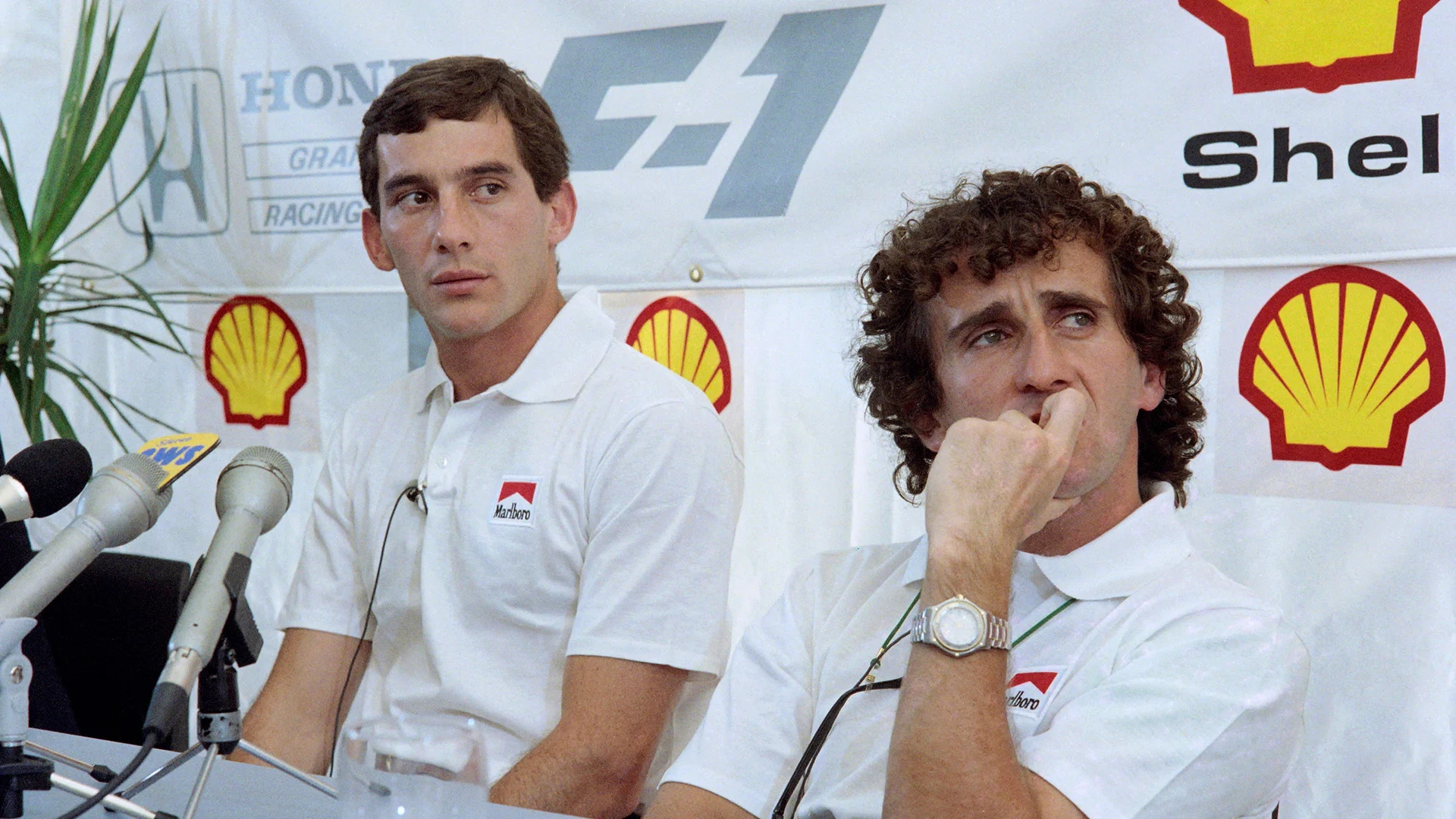
With Prost leaving for Ferrari, Senna and new team mate Gerhard Berger secured more titles across 1990 and 1991 before McLaren slipped down the pecking order.
It wasn't until 1998 when Mika Hakkinen, with the aid of Mercedes power, returned the team to the top after beating Schumacher and Ferrari, and although the Finn won again in 1999, McLaren missed out.
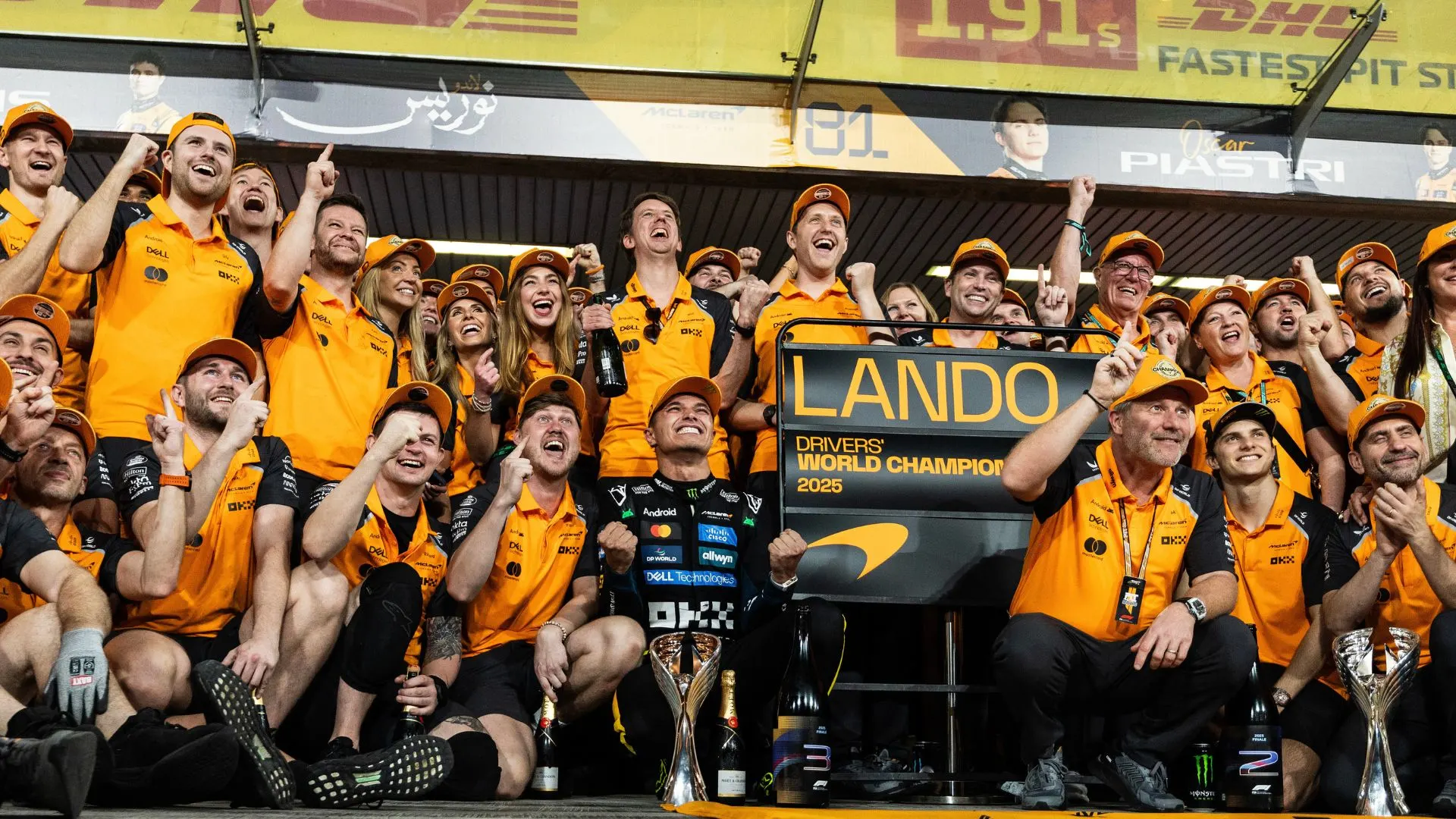
It took until 2024 for McLaren to reach the top again as a constructor, with Mercedes power once again helping Lando Norris and Oscar Piastri to victories, which culminated in the former winning the drivers' title in 2025 as McLaren defended their teams' crown.
Ferrari (16 titles)
Having been in F1 since the creation of the championship back in 1950, it's perhaps unsurprising that Ferrari should be top of this list.
The Scuderia got their first taste of title success as a manufacturer in 1961 as American Phil Hill won the drivers' title, which was followed three years later by another double, this time with John Surtees at the wheel.
Lauda's move in 1974 galvanised the team, and the following year they secured three teams' titles in succession with the Austrian also earning the drivers' crown in 1975 and 1977 – having returned from his fiery shunt and narrowly missing out in 1976.
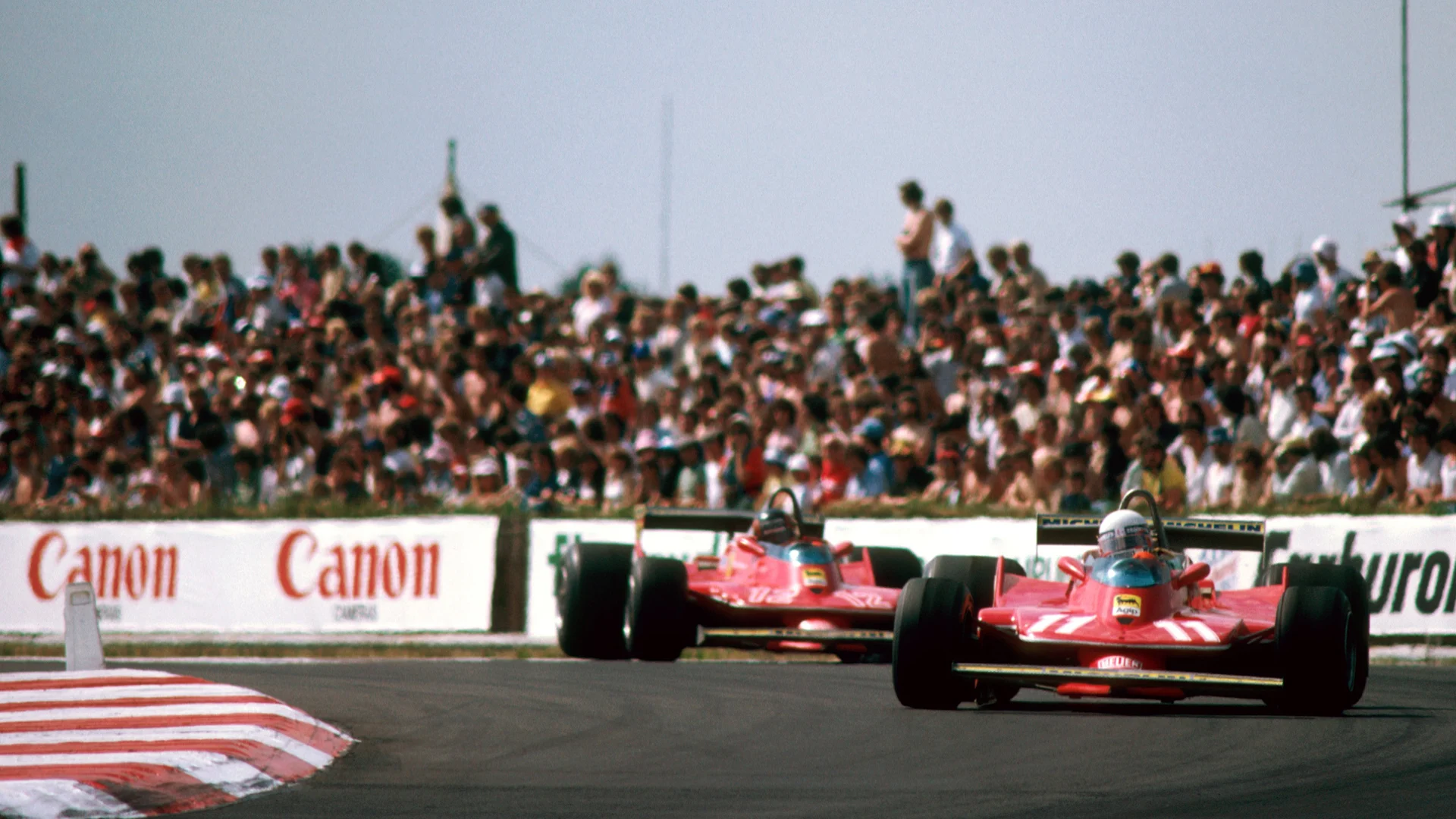
Jody Scheckter and Gilles Villeneuve led the team to another brace of titles in 1979, the former claiming the drivers' title, before back-to-back team titles came in 1982 and 1983 as Didier Pironi, Rene Arnoux and Patrick Tambay all won races for the team.
It took until the late 1990s and Schumacher's influence to earn the Scuderia another title, which came in 1999 as a broken leg for the German opened the door for Eddie Irvine to challenge Hakkinen for the title.
Fully recovered for the start of the new decade, Schumacher and Ferrari became the dominant force in F1, claiming five consecutive drivers' and teams' titles.
With Schumacher retiring at the end of 2006, Kimi Raikkonen joined Felipe Massa at the team, the pair helping Ferrari to another title as the Finn ultimately claimed the drivers' title.
Although Massa just missed out on a drivers' title of his own to Hamilton the following season in the most dramatic circumstances, he and Raikkonen did enough to earn Ferrari a 16th title – currently the most recent it has achieved.
Next Up
Related Articles
 Alonso credits ‘phenomenal’ car after strong drive in Brazil
 UnlockedPALMER: Why Norris’ Sao Paulo victory was one of his best ever wins
 Unlocked‘He was immediately fast’ – Antonelli’s junior racing boss on his early potential
 Vasseur explains Ferrari’s tyre struggles in Brazil
 'No idea what happened on that pit exit' spin – Russell
 Rivals congratulate Mercedes on Constructors' Championship