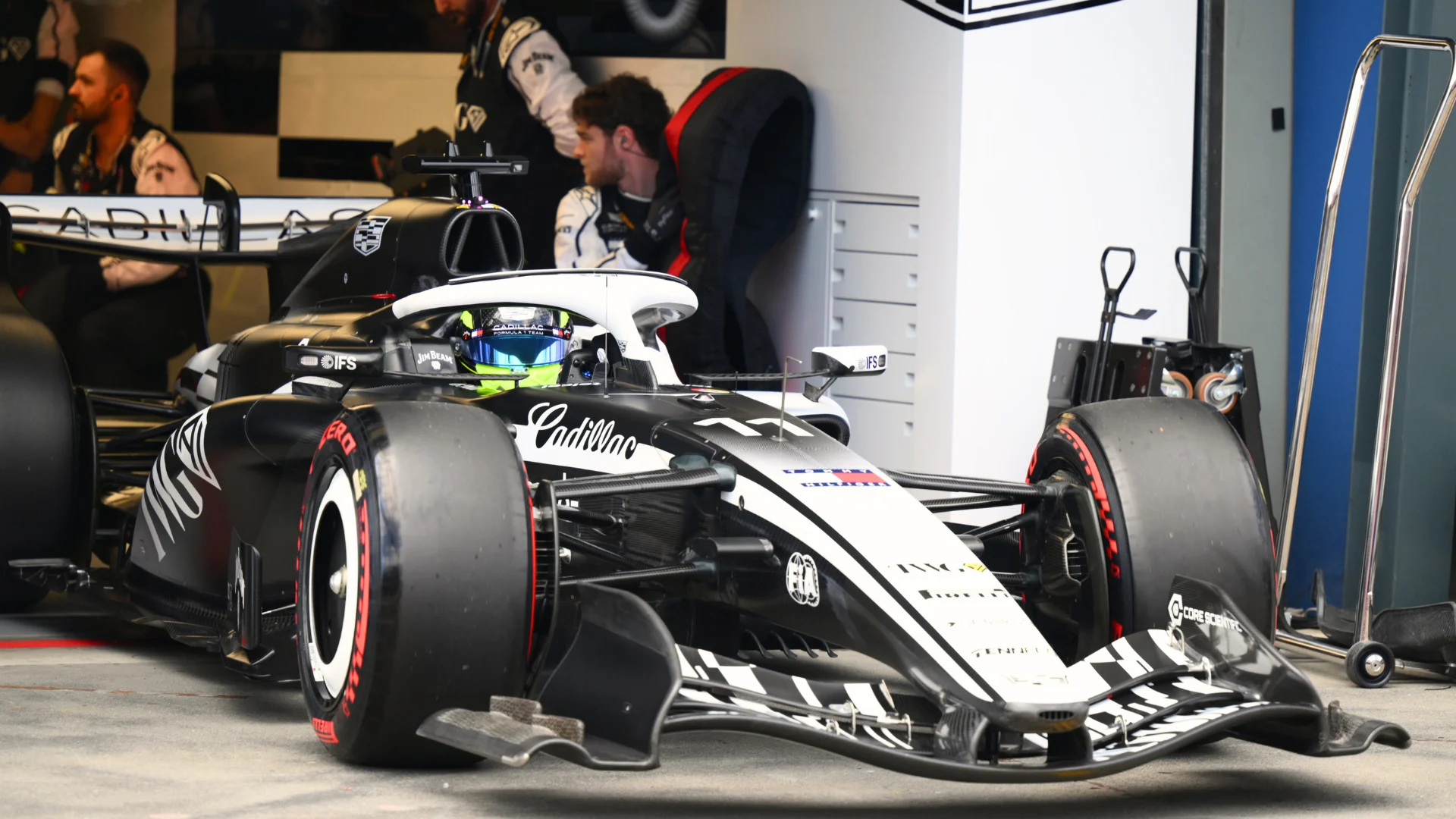
Round 11 of the 2026 season comes from Hungary, and Pirelli have confirmed which tyre compounds they are providing for the final race before the summer break.
The Italian tyre manufacturers are giving the teams the C3, C4 and C5 compounds for the Hungaroring, the softest in their range.
Drivers will get two sets of the hard tyre (marked white), three sets of the medium tyre (marked yellow), and eight sets of the soft tyre (marked red), as well as access to the green intermediate tyre and the blue full wets, should they be required.
An extra set of softs is reserved for those who reach Q3 in Qualifying, while all drivers must use at least two different slick compounds during the race, providing the track is dry.
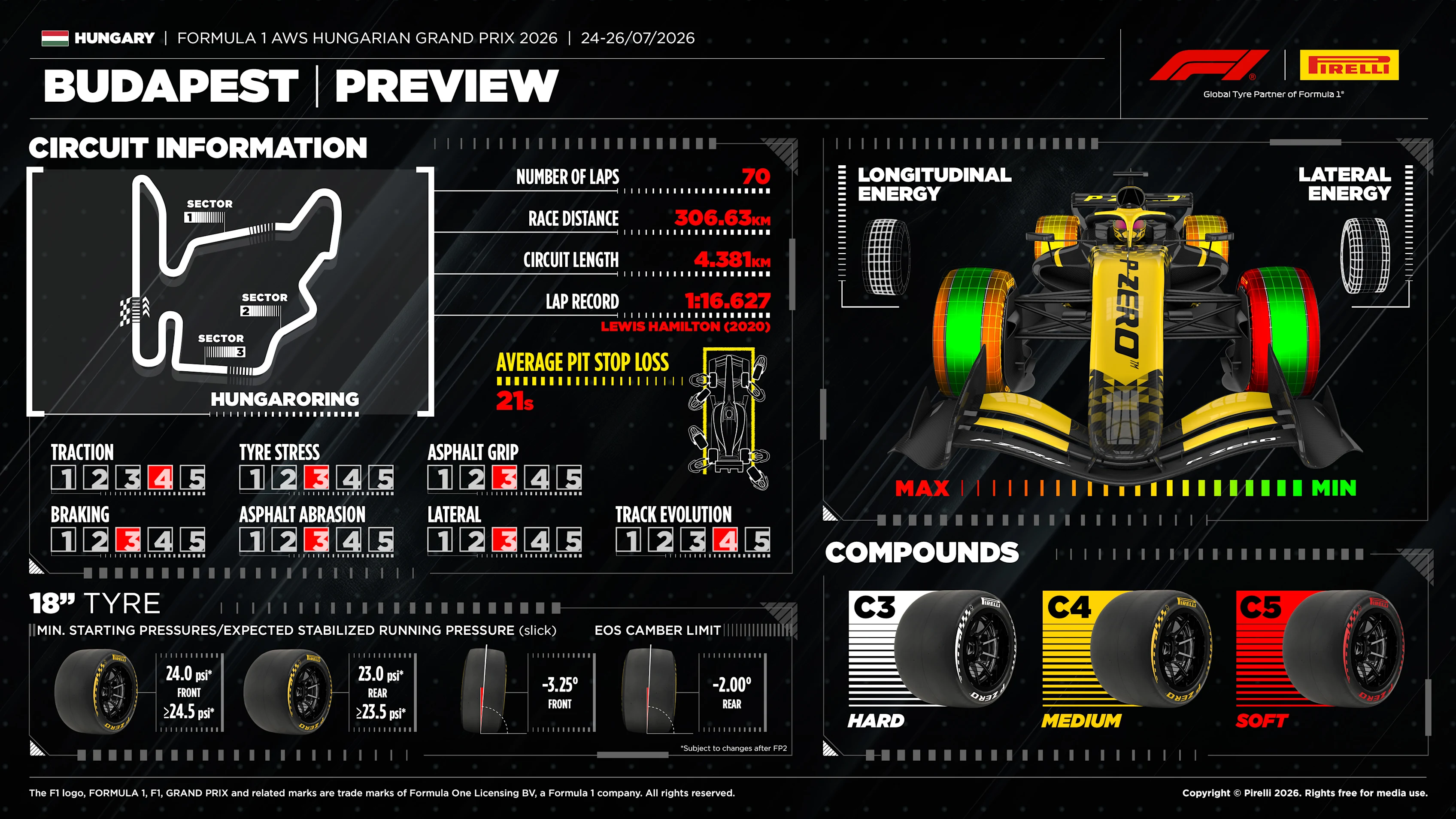
"Over the past two years, the circuit has undergone a comprehensive refurbishment programme, affecting the paddock, hospitality areas, as well as the track and grandstands," reads Pirelli's weekend preview. "For the 2026 Hungarian Grand Prix, Turns 1 and 12 have been resurfaced, following last year’s work on the pit lane and starting grid.
"The circuit measures 4.381 kilometres and features 14 corners. It is often compared to a kart track due to its short length and twisty nature. There is only one real straight, coinciding with the start-finish line, which represents one of the few overtaking opportunities.
"For the rest, drivers are challenged by numerous corners, some of them 180°, which are negotiated 70 times over the course of the race. For this reason, car setups are usually very similar to those used at Monaco.
"Just like in the Principality, the three softest compounds in the range will also be used in Budapest. C3, C4 and C5 are the ideal selection for a slow track where traction and braking stability are crucial to tackle direction changes. The surface has pronounced roughness due to the age of the sections that have not been renewed, and grip levels are among the lowest of the season, with significant track evolution over the weekend.
"Track temperatures at the Hungaroring are typically the highest recorded throughout the season. Thermal degradation is therefore one of the main factors influencing tyre performance, particularly on the rear axle due to the prevalence of traction phases. Graining may also appear on the softer compounds.
"Tyre degradation is expected to bring one-stop and two-stop strategies closer together in terms of overall race time. The choice between the two will also be influenced by track position considerations, on a circuit where overtaking can prove difficult. With very high temperatures, teams are likely to favour the two hardest compounds.
"Following the Hungarian Grand Prix, Pirelli will remain in Budapest with Aston Martin, Audi and Alpine for two days of testing, on Tuesday and Wednesday, to develop next season’s tyres."
Next Up
Related Articles
 Norris in title fight 'until it's not possible' – Brown
 BettingSpanish GP Bet Builder picks after Norris takes pole
 BettingBetting mistakes to avoid during the Spanish GP
/16x9%20single%20image%20-%202026-09-12T160257.650.webp) AS IT HAPPENED: Norris claims scintillating pole for Spanish GP
AS IT HAPPENED: Norris claims scintillating pole for Spanish GP/16x9%20single%20image%20-%202026-09-13T171220.103.webp) Norris 'believes I deserved' Spanish GP victory
Norris 'believes I deserved' Spanish GP victory Antonelli rues pole slipping away in ‘intense’ Qualifying