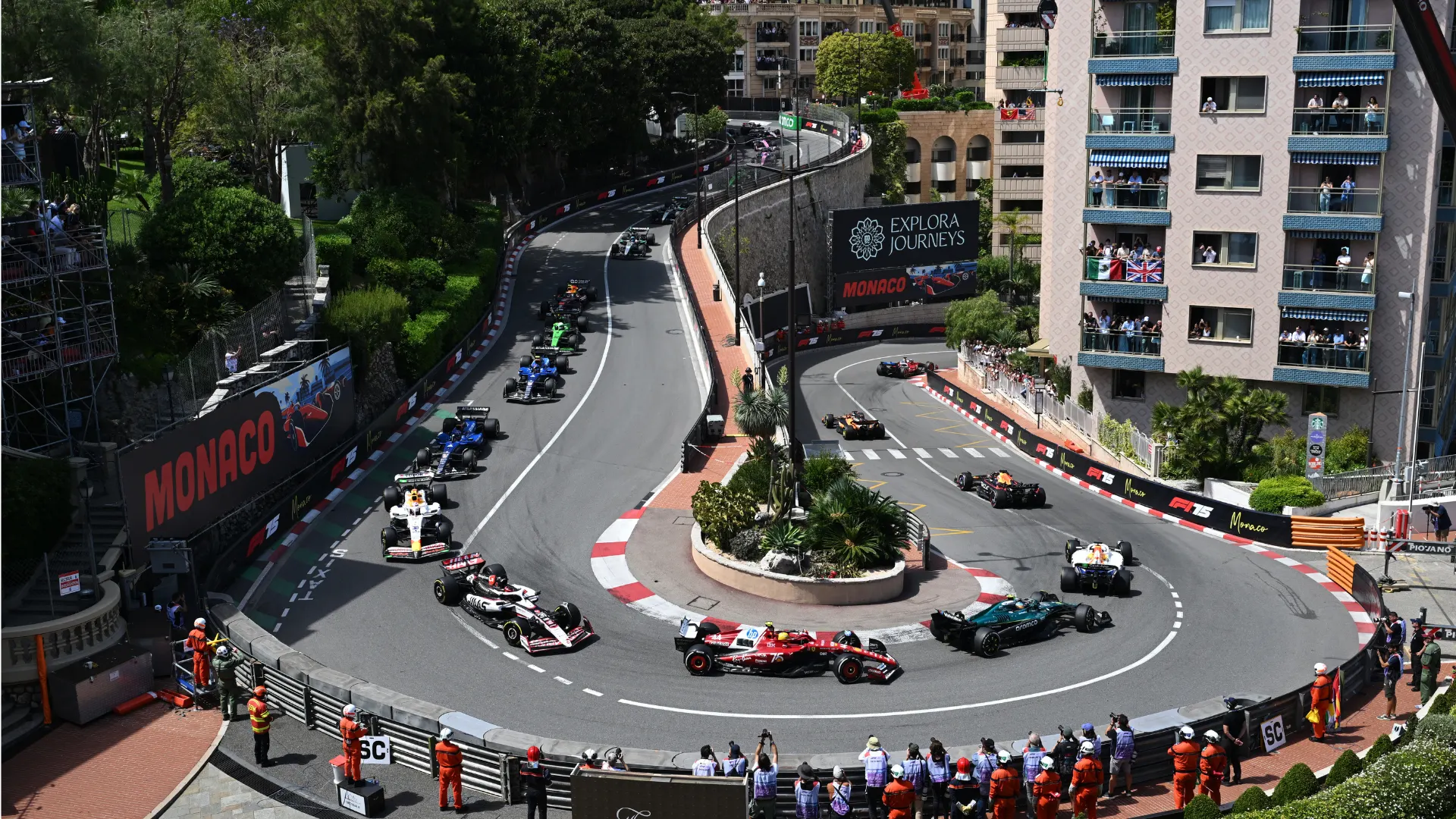
Formula 1 returns to action with the Monaco Grand Prix this weekend. But how much do you know about the historic Circuit de Monaco street track? F1.com has your all-in-one guide…
Key Circuit de Monaco statistics
- Circuit length: 3.337km
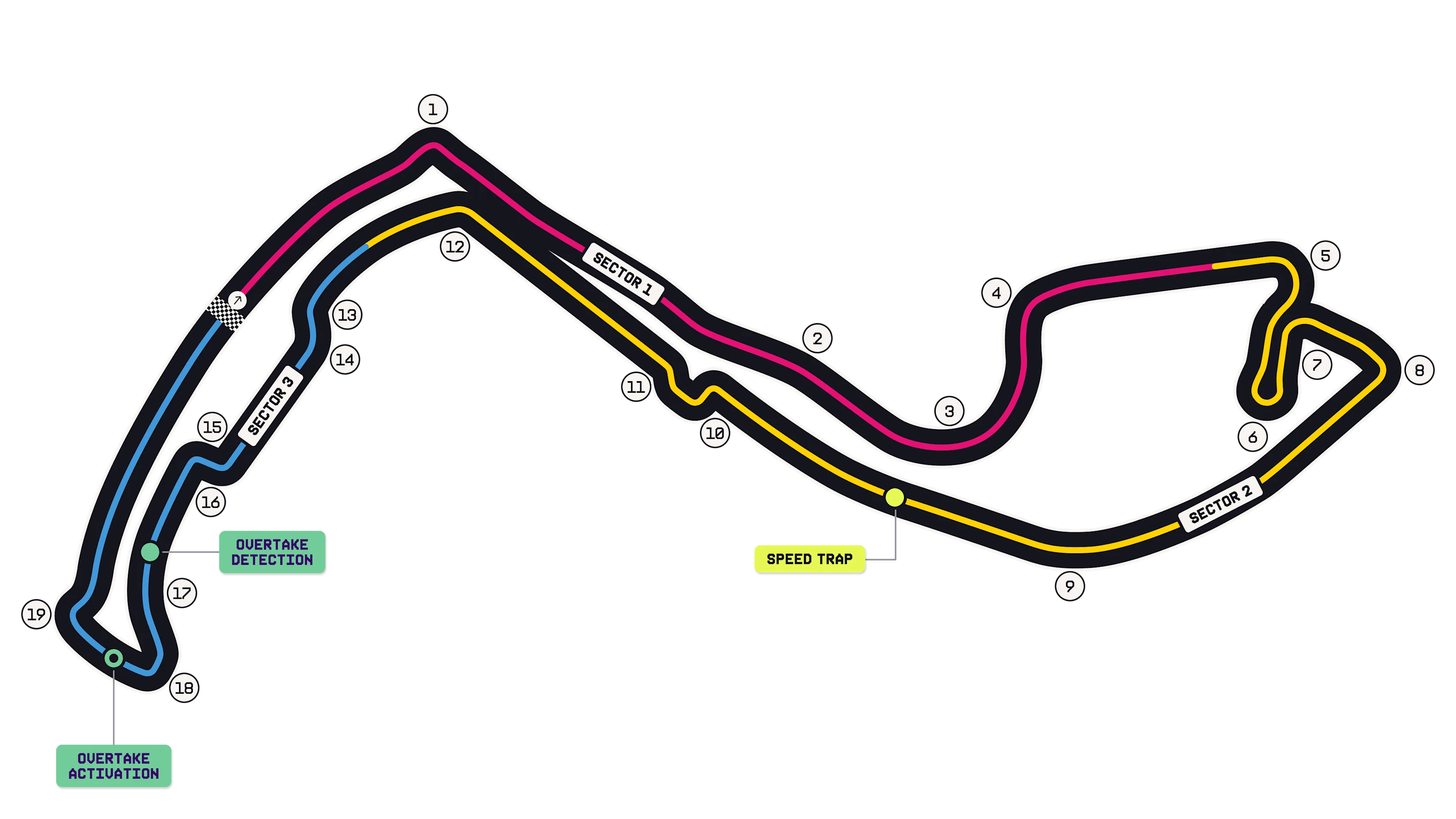
- Number of turns: 19
- Number of laps: 78
- Race distance: 260.286km
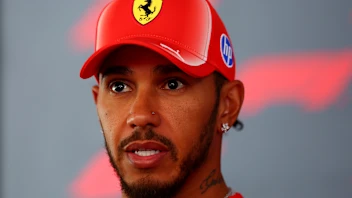
- Lap record: 1m 12.909s – Lewis Hamilton (2021)
When was Monaco’s first Grand Prix?
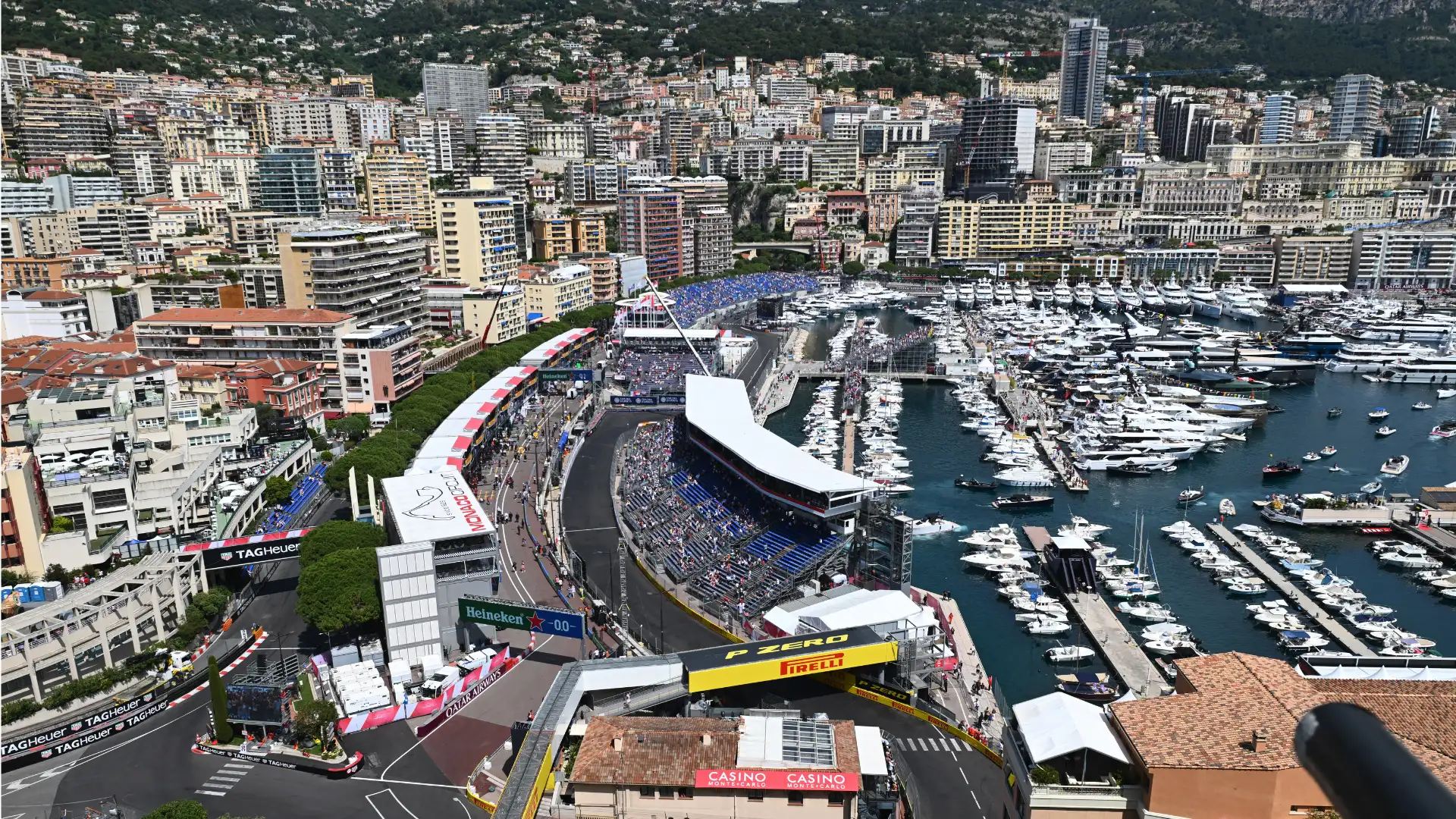
While Monaco is the second smallest sovereign state after the Vatican City, its tight and twisty streets combine to make up one of the most famous circuits in the world.
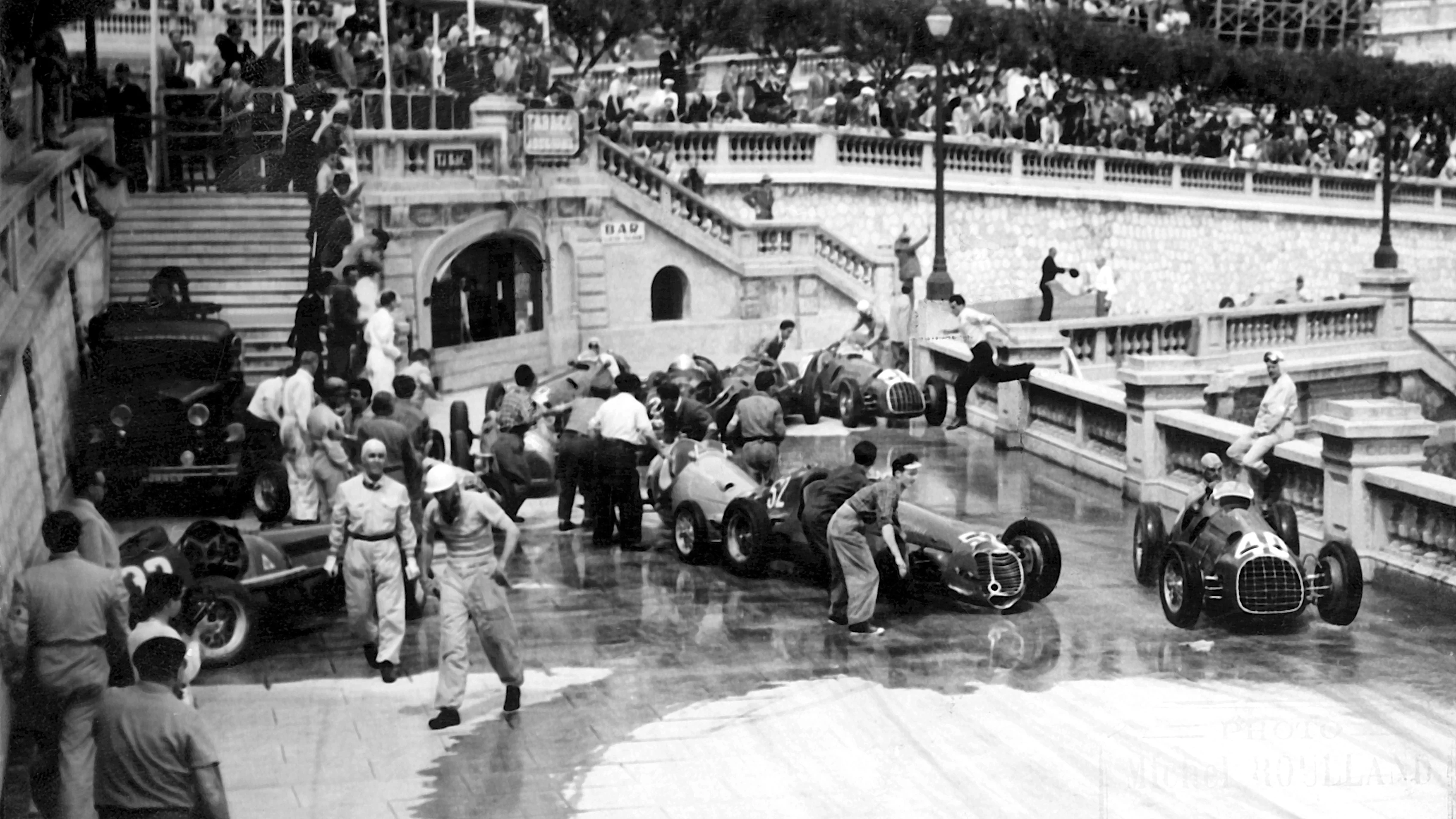
Racing cars first appeared in Monte Carlo back in 1929, after cigarette manufacturer Antony Noghes organised a gathering with his friends from the Automobile Club de Monaco.
In terms of the F1 World Championship, founded in 1950, the Principality was given a spot on the very first edition of the calendar, and has kept its place across almost every year since.
Known for an opulent setting and significant on-track challenge, Monaco forms part of motorsport’s so-called ‘Triple Crown’ alongside IndyCar’s Indianapolis 500 and the 24 Hours of Le Mans endurance event.
What’s the circuit like to drive?
Triple F1 World Champion Nelson Piquet memorably described the challenge of racing in Monaco as “like riding a bicycle around your living room”, with drivers having to thread the needle on a narrow strip of tarmac between imposing, punishing barriers.
There is barely a moment to relax, with the corners coming thick and fast, and the ‘straights’ going by in a flash, meaning it is as much a mental test as it is a physical one.
“Monaco is a beautiful circuit and a true driver’s track. It feels like madness in an F1 car; even in comparison to other street circuits it’s so narrow, the roads are cambered, it’s tight and twisty and there are challenges everywhere,” explains former Renault F1 driver Jolyon Palmer.
“I love coming out of Sainte Devote, Turn 1, which is a challenge in its own right. It’s so steep at the exit, you’re looking at the sky going to Massenet and Casino. You’ve got to hug the inside line at Massenet, otherwise you skittle into the barriers on the outside.
“The hairpin is a little bit more straightforward, but you feel like you’re in there for an eternity, bouncing your way through as it’s all really bumpy.
“You flash out of the tunnel and pick a braking point for the chicane, where you’ve got to get as close as you can to the armco on the left-hand side. Occasionally, you see people getting too greedy and just nibbling it, causing a puncture and a bit of damage.
“You also see so many people going straight through the chicane, especially early on in practice, just trying to find the right braking point. It’s one of the few places where you have a little bit of room for error, so people will take it the fastest.”
Monaco is a beautiful circuit and a true driver’s track. It feels like madness in an F1 car.
Where are the Straight Mode zones and overtake detection?
As a reminder, and as explained in our pre-season summary of regulation changes, Straight Mode is a different aerodynamic configuration that allows cars to reduce their drag, making them more efficient when accelerating up towards top speed.
The rear wing continues to open up a gap – just like it did when drivers used DRS (the Drag Reduction System) in the past – but now the front wing also moves. The uppermost front wing elements drop down at the same time the rear wing’s top element does.
This is a mode that is used on every single lap in dry conditions, in every area that is designated for it. Essentially, the car will adapt between two different configurations depending on where it is on the track, providing maximum downforce in corners but then less drag on straights.
However, in Monaco, due to the nature of the circuit, and with safety in mind, Straight Mode is off limits for the first time this season – meaning front and rear wings will stay fixed in their maximum downforce setting throughout every session.
Meanwhile, Overtake Mode replaces DRS and is a new power mode that allows a driver to recharge more electrical energy, and generate an additional electrical power profile, so they can sustain a higher speed for a longer period.
There is one detection point per lap for this mode – expected to be out of the final corner on many occasions, leading onto a long straight – and it will be available to drivers on the following lap as long as they stay within a second of the car in front at that detection point.
In Monaco, the Overtake Detection line comes between Turns 16 and 17, while the Overtake Activation line follows between Turns 18 and 19, leading onto the start/finish straight.
Five fun facts about the Monaco Grand Prix
- Monte Carlo is the shortest circuit on the 2026 calendar at 3.337km
- Ayrton Senna has claimed the most pole positions (5) and victories (6) at the Monaco Grand Prix
- 10 of the last 12 Grands Prix held in Monte Carlo have been won from the front row of the grid
- McLaren have won the most Monaco Grands Prix with 16 victories
- McLaren will also celebrate their 1000th Grand Prix in Monte Carlo this weekend
Next Up
Related Articles
 F3: Clerot seals win in Madrid as Campos take Teams’ title
 Stroll gets grid penalty for Spanish Grand Prix
 UnlockedWhat are the tyre strategy options for the Spanish Grand Prix?
/16x9%20single%20image%20-%202026-09-12T125608.252.webp) AS IT HAPPENED: Bearman and Hamilton crash in Madrid FP3
AS IT HAPPENED: Bearman and Hamilton crash in Madrid FP3 Sainz hit with grid penalty for Spanish GP
 Hamilton reflects on missing pole for Spanish GP