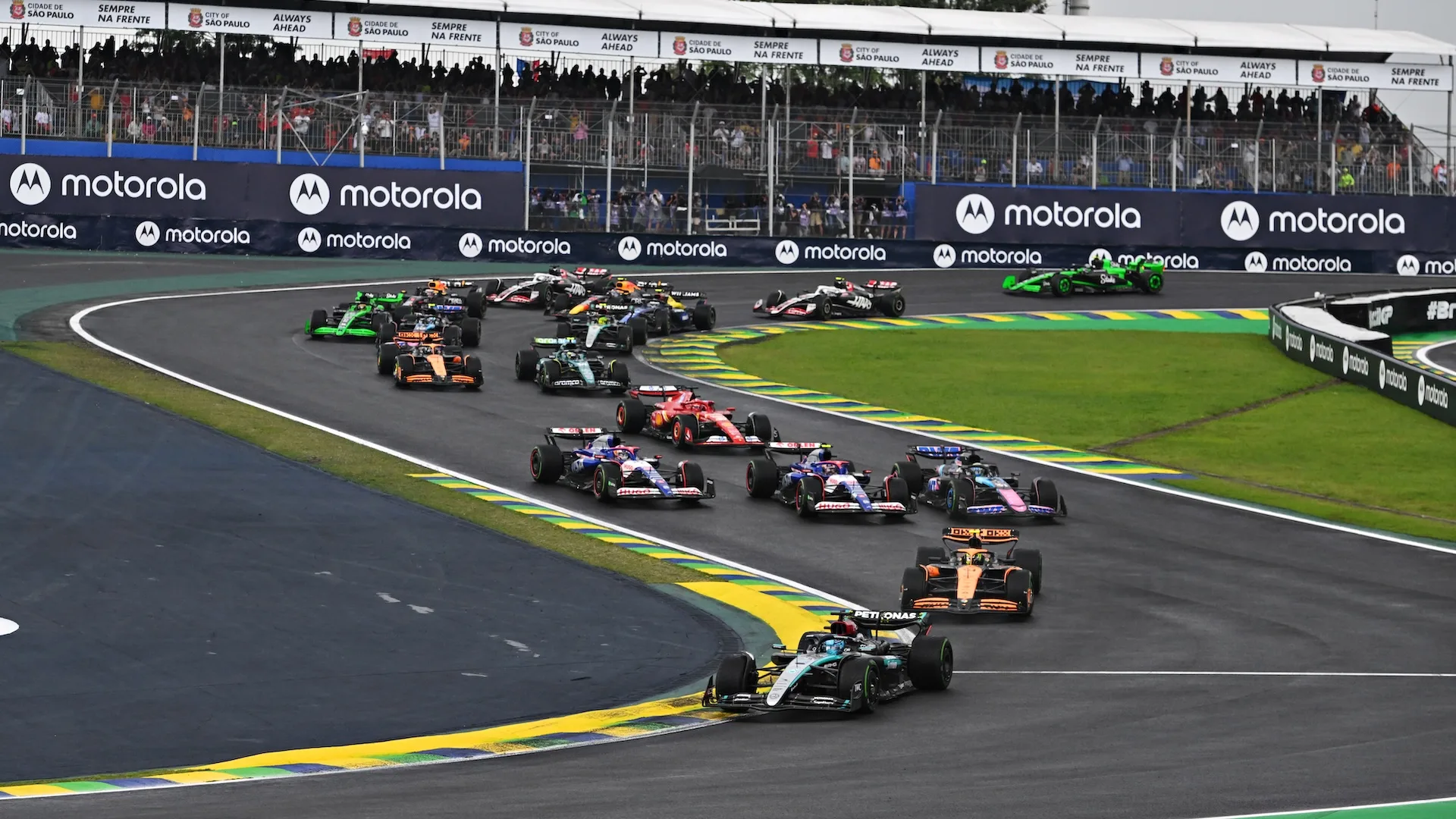
The Drivers’ Championship may have been wrapped up, but there’s still plenty left to fight for as Formula 1 moves onto Brazil for Round 20. How much do you know about the Autodromo Jose Carlos Pace? F1.com has your all-in-one guide…
Key Autodromo Jose Carlos Pace statistics
- Circuit length: 4.309km
- Number of turns: 15
- Number of laps: 71
- Race distance: 305.879km
- Lap record: 1m 10.540s – Valtteri Bottas (2018)
When was Brazil’s first Grand Prix?
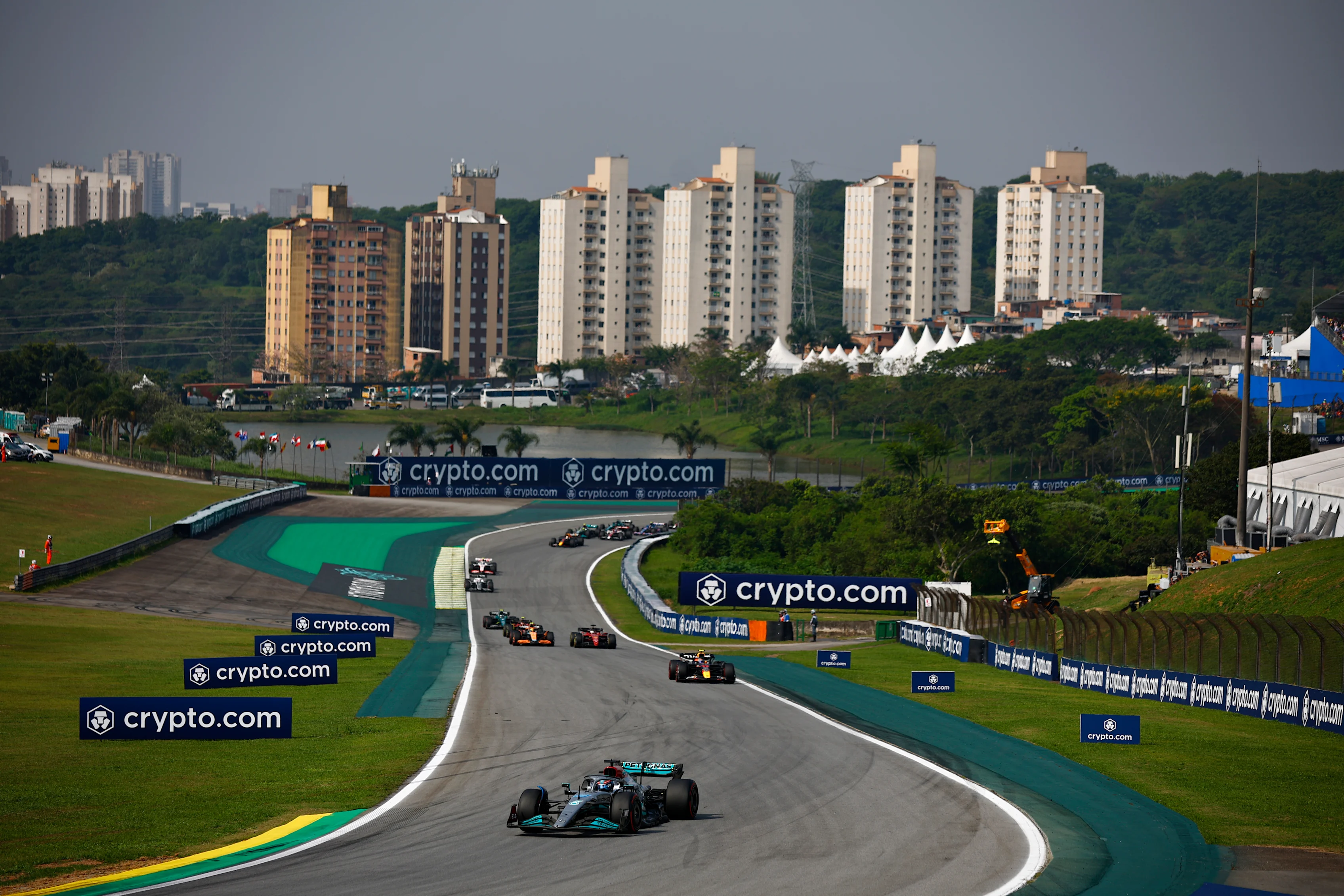
Brazil has a rich motorsport history, so it’s no surprise that F1 has raced in the country for more than 50 years, with the first championship event held at Interlagos in 1973. Rather fittingly, the first two iterations were won by Sao Paulo’s very own Emerson Fittipaldi, while another local named Carlos Pace was victorious in 1975. The track would be named for him in 1985.
The paddock then went back and forth between this track and Jacarepagua in Rio de Janeiro until settling at Interlagos for good, following major renovations that saw it shortened and resurfaced ahead of the 1990 season.
It’s become a highly anticipated feature of the calendar ever since, having been the site of dramatic incidents, championship-deciders and incredible comeback drives.
What’s the circuit like to drive?
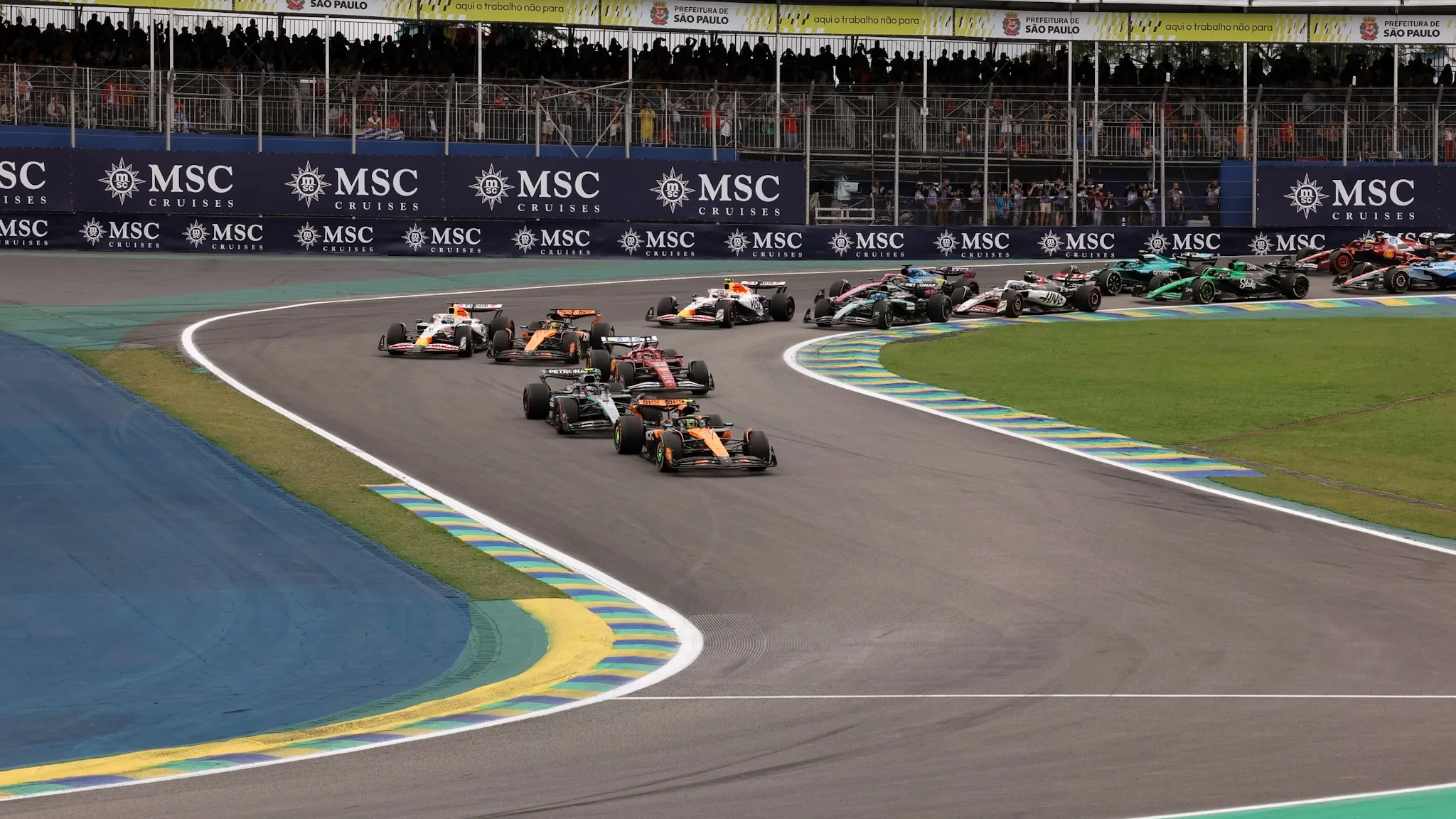
A number of factors come together to make Interlagos one of the greatest challenges of the season – namely the unpredictable weather, anti-clockwise layout, and extreme elevation changes – but that doesn’t mean it’s not a favourite for drivers and fans alike.
It’s also one of the shorter F1 tracks at 4.3km, but offers plenty of overtaking opportunities as long as you gamble on the correct tyres, which can be difficult when conditions have been known to switch from dazzling sunshine to heavy rain in a matter of minutes.
Jolyon Palmer, former Renault F1 driver, explains: “Interlagos has a tricky first corner; you can brake much later than you imagine and carry speed into the apex. But brake too late and it's easy to lock up the front-left.
“The middle sector here is all about the flow, the corners come thick and fast. One lock-up in either of the tight right-handers and it puts you off line and out of sync for the whole lot. It's easy to lock up as well because you are loaded laterally on the entries there. It's a technical sector where the rhythm is everything.
“The final corner is critical, it's all about exit speed to carry you onto the whopping straight back up the hill. You've got to get the right balance between opening up the corner and taking too much kerb as well, which can unsettle the car and cost you exit speed.
“Overall it's a short but fun circuit to drive. The anti-clockwise nature and long, loaded left-handers make this one a bit harder physically for the drivers as well. By the end of this race you might be feeling it on the neck, which isn't used to being loaded up so much on that side.”
It's a short but fun circuit to drive
Where are the Straight Mode zones and Overtake detection?
As a reminder, and as explained in our pre-season summary of regulation changes, Straight Mode is a different aerodynamic configuration that allows cars to reduce their drag, making them more efficient when accelerating up towards top speed.
The rear wing continues to open up a gap – just like it did when drivers used DRS (the Drag Reduction System) in the past – but now the front wing also moves. The uppermost front wing elements drop down at the same time the rear wing’s top element does.
This is a mode that is used on every single lap in dry conditions, in every area that is designated for it. Essentially, the car will adapt between two different configurations depending on where it is on the track, providing maximum downforce in corners but then less drag on straights.
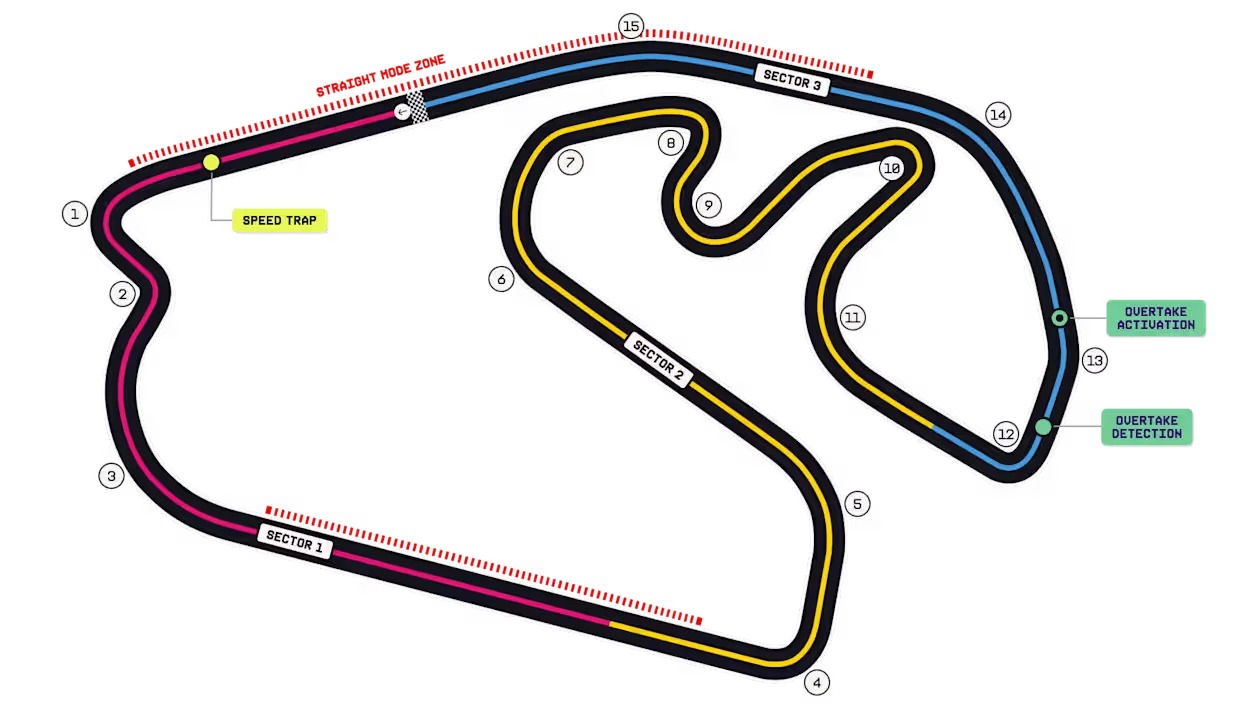
In Brazil, there are two designated Straight Mode zones – from the exit of Turn 14 all the way down to Turn 1, and between Turns 3 and 4.
Meanwhile, Overtake Mode replaces DRS and is a new power mode that allows a driver to recharge more electrical energy, and generate an additional electrical power profile, so they can sustain a higher speed for a longer period.
There is one detection point per lap for this mode – expected to be out of the final corner on many occasions, leading onto a long straight – and it will be available to drivers on the following lap as long as they stay within a second of the car in front at that detection point.
Around the Autodromo Jose Carlos Pace, the Overtake detection point comes just after Turn 12, while the Overtake activation line follows at the exit of Turn 13.
Five fun facts about the Sao Paulo Grand Prix
- The track is more commonly known as Interlagos, which translates to ‘between lakes’ and refers to the Guarapiranga and Billings Reservoirs
- At 765m elevation, Interlagos is one of the 3 highest-elevation circuits on the calendar, along with the Red Bull Ring (at almost identical altitude) and the far-higher Mexico City at 2,232m
- This is statistically the best circuit for overtaking on the calendar, having produced the most passes of any event in 2021 and 2022
- Only one of the last nine Grands Prix at this track has passed without any Safety Car, Virtual Safety Car or red flag interventions (2018)
- On the current grid, Lewis Hamilton and Max Verstappen are tied on three wins each in Brazil, with the former set to celebrate his 400th Grand Prix this weekend
Next Up
Related Articles
 Camara to make F1 debut for Haas in Sao Paulo
 UnlockedPALMER: What impressed me most in Antonelli’s title year
 5 storylines we're excited about ahead of the Sao Paulo GP
 F1 champion Alan Jones passes away, aged 80
 BettingThe 5 drivers most likely to qualify fastest in Brazil
 The inside story of Lewis Hamilton’s first F1 test